
Table of Contents
Introduction
Finding the best time to apply serum can make or break your skincare results. Your serum timing for skin plays a huge role in how well active ingredients work—morning serums shield and energize, while night serums repair and renew. When you understand the day vs night skincare products difference, your complexion glows with balance and vitality.
Whether it’s vitamin C for glowing skin in the morning or retinol benefits at night, timing transforms your results. Let’s dive into how to perfectly match your serum with your skin’s natural rhythm for visible, lasting radiance.

Understanding How Serums Work
A face serum is a lightweight, fast-absorbing liquid filled with skincare active ingredients that penetrate deeper into your skin than a regular cream. Unlike moisturizers, which mainly hydrate the surface, serums deliver potent nutrients that work on skincare for cell renewal and repair from within.
Your serum timing for skin matters because your skin behaves differently during the day and night. During the day, it focuses on morning protection skincare—shielding from UV rays, pollution, and oxidative stress. At night, your skin switches gears into nighttime skin repair, regenerating cells and rebuilding a healthy skin barrier. That’s why both AM vs PM skincare routines are essential—they serve distinct, complementary purposes for glowing, balanced skin.
Morning vs Night Serum: What’s the Difference?
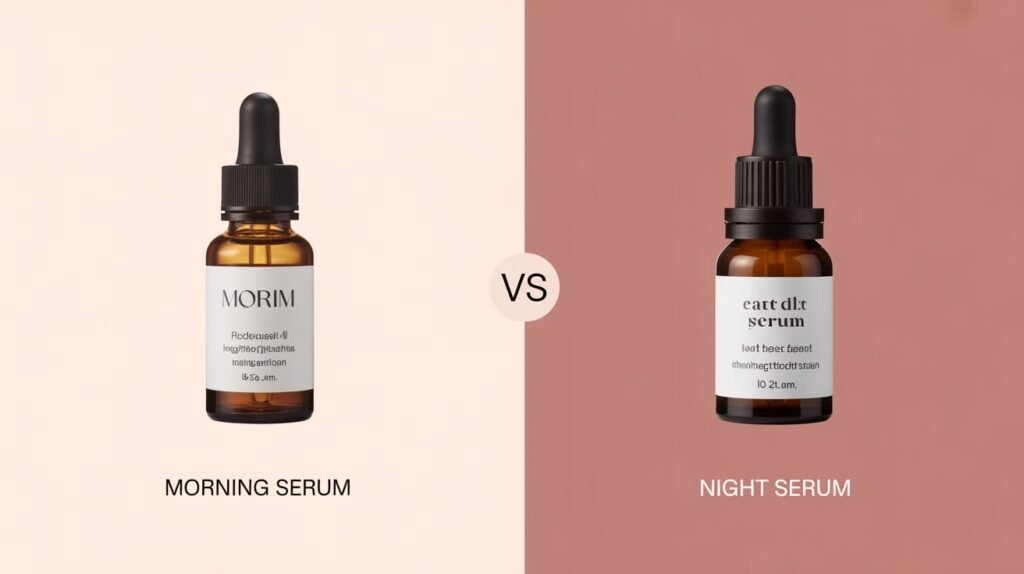
During the day, your skin acts as a soldier on the front line. It’s constantly fighting sun damage, pollution, and stress. That’s where lightweight serums for daytime come in—they strengthen, protect, and enhance your natural defense system.
At night, your skin becomes a repair workshop. This is when repairing night serums with retinol benefits at night, peptide serum for collagen, and ceramide moisture repair get to work, boosting elasticity and healing damage. Think of day vs night skincare products as two halves of a full circle—one shields, the other restores. Using both ensures continuous protection and renewal.
How to Choose the Right Time to Apply Serum
The best time to apply serum depends on your skin type, environmental factors, and the serum ingredients list. For instance, oily or acne-prone skin benefits from oil control serums and niacinamide serum benefits in the morning, while dry or mature skin thrives with deep hydration overnight from hyaluronic acid hydration or anti-aging night routine ingredients.
If your environment exposes you to UV rays or pollution daily, antioxidant skincare in the morning is non-negotiable. On the other hand, if your skin faces dryness, dullness, or fine lines, make nighttime skin repair your focus with night repair serums and barrier-repair skincare. Remember, how to choose a serum depends on balancing both needs—protection by day and day serum restoration by night.
Best Morning Serums and Their Benefits
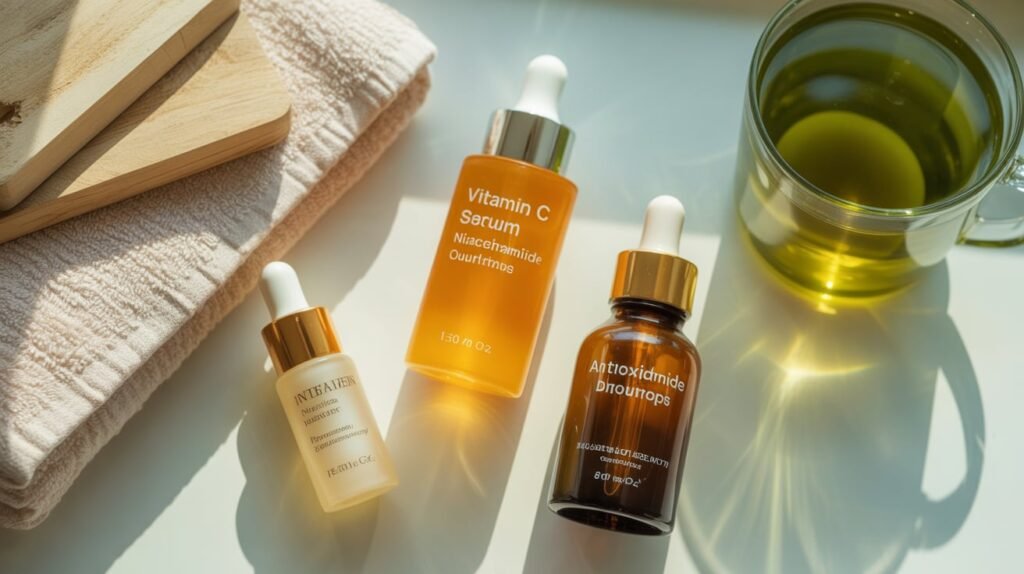
Morning is your skin’s defense phase. The best AM serum for dull skin typically includes vitamin C for glowing skin, niacinamide, and antioxidant skincare. These ingredients form a shield that fights free radicals and boosts your UV protection skincare.
Vitamin C morning routine products are celebrated for their ability to brighten and even out skin tone, while niacinamide serum benefits include reducing oil, redness, and visible pores. Antioxidants like green tea or ferulic acid add extra pollution defense skincare support, helping you maintain that healthy morning radiance and firm barrier against environmental stressors.

How to Apply Morning Serums Correctly
Knowing how to apply serums correctly can make or break your skincare routine. Always start with a clean face, then apply your brightening serum for serum for for morning use before moisturizer and sunscreen. Allow 30–60 seconds for your serum to absorb before layering.
Follow the proper skincare layering order—cleanser, toner, serum, moisturizer, and finally, sunscreen after serum. This locks in hydration and ensures the actives in your lightweight serums for daytime remain potent. If you’re using multiple serums, remember how to layer serums—thinnest to thickest consistency for optimal penetration.
Best Night Serums and Their Benefits
When evening falls, your skin begins its repair cycle. That’s when retinol night routine ingredients shine. Retinol benefits at night include stimulating collagen, fading dark spots, and reducing fine lines. Combine that with peptide serum for collagen and ceramide moisture repair, and you have the ultimate anti-aging night routine.
Meanwhile, hyaluronic acid hydration and deep hydration overnight serums infuse the skin with moisture, plumping and soothing while you sleep. The synergy of night repair serums and cell renewal skincare ingredients leads to smoother texture and more resilient skin by morning.
Nighttime Serum Application Tips
Application timing matters as much as the serum itself. After cleansing and toning, apply your repairing night serums on slightly damp skin to boost absorption. If you use AHA/BHA/BHA exfoliating serum, make sure it’s applied on alternate nights to prevent irritation.
Avoid layering retinol with vitamin C—they can destabilize each other. Instead, alternate usage: vitamin C morning routine, retinol night routine. Always follow with a moisturizer rich in ceramide moisture repair to lock in nutrients and strengthen your healthy skin barrier. These nighttime skincare tips help prevent skincare mistakes to avoid,avoid,, like over-exfoliation or dryness.
Serum Do’s and Don’ts
Even the best dermatologist-recommended-recommended serums can underperform if used incorrectly. Do follow patch testing skincare products before full use to avoid sensitivity. Do apply serums consistently for at least 4–6 weeks to see visible improvement.
Don’t over-layer or mix strong actives like acids and retinoids in one session—this can damage your healthy skin barrier. And don’t forget serum before moisturizer; otherwise, you’ll block absorption. Following these skincare do’s and don’ts ensures safe and effective results.
Expert Tips for Maximizing Serum Results
Dermatologists agree that a consistent routine amplifies results. Exfoliate gently 2–3 times weekly to remove dead cells so your hydrating face serums can penetrate deeper. Maintaining a balanced barrier-repair skincare approach prevents irritation and maximizes glow.
Experts recommend alternating anti-aging serums with hydrating ones, especially in colder climates. This helps restore elasticity while avoiding dryness. According to Dr. Lee, “Your serum’s success depends not just on the ingredient but on ingredient but on on when and how you use it.” Consistency, patience, and proper serum timing for skin are your glowing skin secrets.
Morning vs Night Serum Comparison Table
Here’s a quick guide comparing AM vs skincare products, helping you choose your ideal match:
| Routine | Key Ingredients | Main Benefits | Best For |
| Morning | Vitamin C, Niacinamide, Antioxidants | Brightens vs. vs. Brightens and protects from UV and pollution | Dull, oily, or tired skin |
| Night | Retinol, Peptides, Hyaluronic Acid, Ceramides | Repairs, hydrates, firms | Mature, dry, or stressed skin |
This AM/PM skincare chart simplifies your routine and helps you select day vs night skincare products tailored to your specific needs.
Final Thoughts
True beauty thrives in balance. Using serums both morning and night lets you harness the full potential of your skin’s natural cycle. Morning skincare routine protects; night skincare routine repairs. Together, they create harmony and long-term transformation.
To keep your glow thriving, combine brightening serum morning use with repairing night serums and follow your skincare routine step-by-step daily. The secret to radiant skin lies not in one miracle product but in the rhythm of consistent care.
FAQs
Q1. Can I use the same serum in the morning and at night?
Usually, no. Day and night serums serve different purposes. Morning formulas focus on UV protection skincare and pollution defense skincare, while night ones promote cell renewal skincare.
Q2. Should serum be applied before or after moisturizer?
Always apply serum before moisturizer. This ensures your skin absorbs the active ingredients before sealing them in with hydration.
Q3. How long does it take for serums to show results?
Depending on the formula, results typically appear after 4–8 weeks of consistent use. Anti-aging serums or retinol benefits at night might take slightly longer due to gradual cell renewal.
Q4. Can I use multiple serums together?
Yes, but remember how to layer serums properly. Avoid mixing actives like AHA/BHA exfoliating serum and retinol in one routine.
Q5. What’s the biggest skincare mistake to avoid with serums?
Overuse. Applying too much or too often can weaken your healthy skin barrier. Stick to a consistent AM and PM rhythm.
Your article helped me a lot, is there any more related content? Thanks!