
Table of Contents
Introduction
Ever felt butterflies in your stomach before a big day? Science shows that feeling is more than just a metaphor. The gut and mental health connection is real, and your gut microbiome plays a critical role in shaping your mood and emotions. This intricate system communicates with your brain, affecting how you handle stress, process thoughts, and even sleep at night. Understanding this link can transform how you approach healthy digestion and mood balance, giving you tools to improve both your mind and body. In this article, we’ll explore how gut bacteria affect emotions, practical strategies for holistic gut care, and the science behind brain-gut communication.
Your digestive health influences your neurotransmitters serotonin dopamine, hormones, and inflammation levels. A healthy gut means more than just smooth digestion—it can help regulate stress, promote mental wellness, and support overall well-being. By learning natural ways to boost gut flora, choosing foods for gut health and happiness, and adopting a healthy gut diet, you can enhance both your physical and emotional state. For anyone seeking to understand how to improve mental health through diet, the gut-brain connection offers a fascinating roadmap.
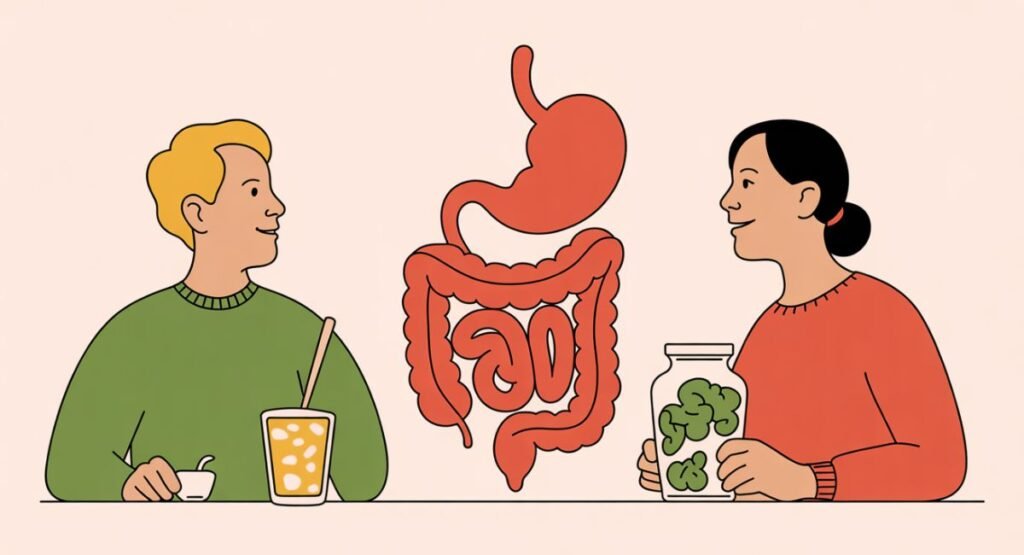
What Is the Gut-Brain Connection?
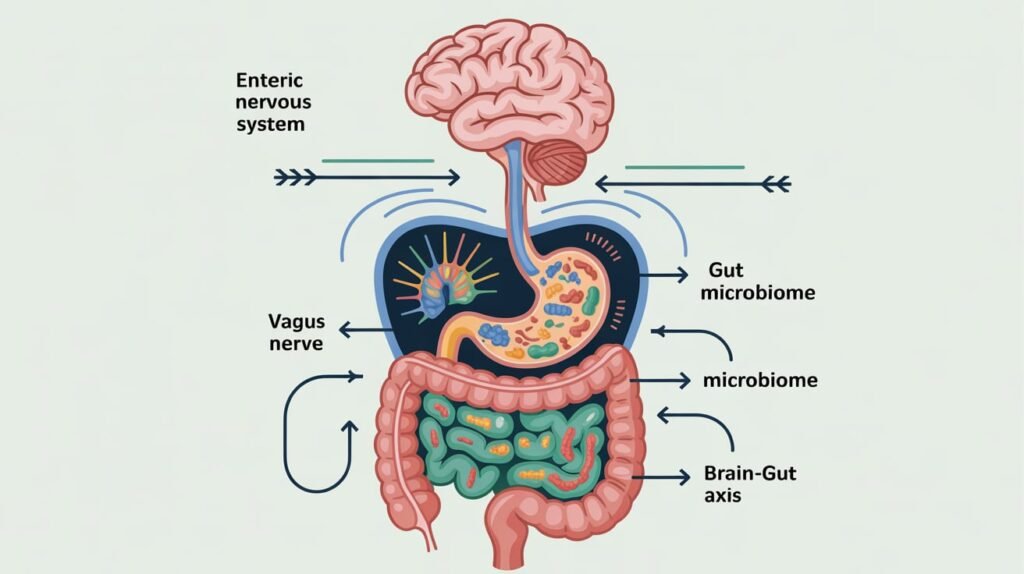
The gut-brain connection is a complex communication system between your digestive tract and your brain. This system uses nerves, hormones, and chemical messengers to coordinate signals about your mental health, digestion, and overall balance. The enteric nervous system, often called the “second brain,” contains over 100 million nerve cells and plays a pivotal role in brain-gut communication. It senses changes in your gut environment and relays information to your brain, influencing mood and emotions and your stress response.
This mind-body connection means that what happens in your digestive tract affects your thoughts, feelings, and energy levels. Studies show that disruptions in gut flora balance can trigger gut inflammation and depression. Researchers are finding that fostering a diverse gut microbiome can enhance serotonin production, regulate dopamine levels, and improve both cognitive function and emotional resilience. Understanding this axis is the first step in creating a plan to strengthen gut health and mood connection naturally.
The Role of the Vagus Nerve in Gut-Brain Communication
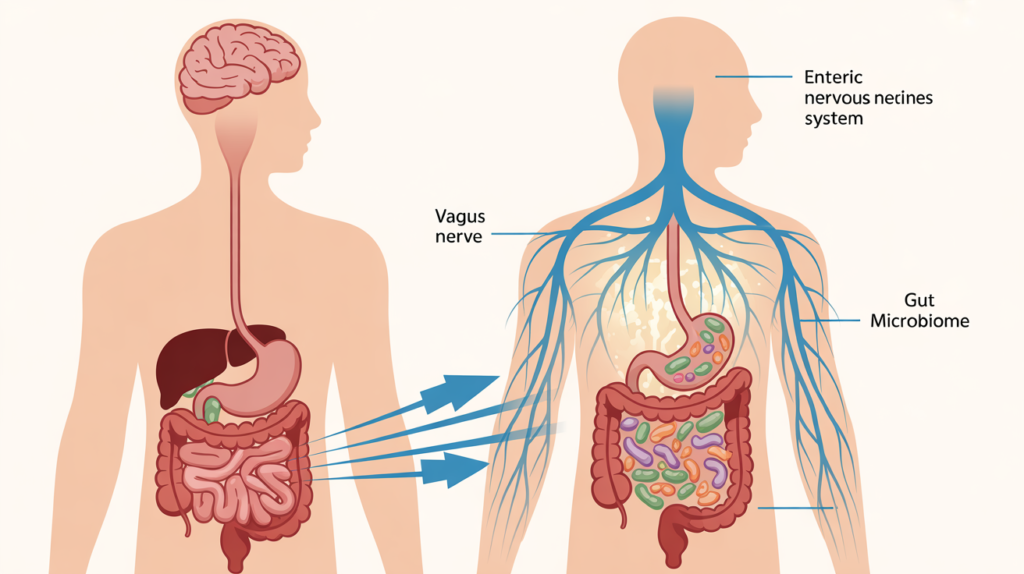
The vagus nerve acts as the superhighway of messages between your gut and brain. It helps regulate digestion, signals stress levels, and even influences anxiety. When your vagus nerve and anxiety response are balanced, it can support better sleep, reduced stress, and improved mental wellness. Conversely, a disrupted vagus system can heighten stress and anxiety and worsen digestive issues.
Your vagus nerve also affects inflammation levels in the gut. Chronic stress can dampen its function, creating a loop where poor digestive tract health worsens mood and emotions, and heightened anxiety further disrupts your gut microbiome and brain function. Techniques like deep breathing, meditation, and diaphragmatic exercises can enhance vagal tone and improve gut health and mood connection over time.
How Gut Bacteria Influence Mental Health
Your gut microbiome is a bustling community of gut bacteria, viruses, and fungi that influence digestion, immunity, and mental health. These microorganisms produce chemicals like serotonin and dopamine, which directly affect your mood and emotions. Roughly 90% of serotonin and half of dopamine is created in the gut, highlighting the importance of gut flora balance for emotional stability.
When your gut microbiome is imbalanced, a condition known as dysbiosis, it can trigger gut inflammation and depression. Poor bacterial diversity disrupts brain-gut communication, leading to fatigue, irritability, and heightened stress and anxiety. Nurturing a diverse gut ecosystem through probiotics for mental wellness and prebiotic fiber benefits can help restore harmony and improve your nutrition for emotional wellbeing.
The Science Behind the Gut-Mood Relationship
The relationship between your gut and brain is both biochemical and neurological. Neurotransmitters like serotonin, dopamine, and GABA regulate appetite, sleep, and mood and emotions, while gut bacteria influence these levels. Chronic inflammation in the gut can alter hormone signals and disrupt mental wellness, leading to anxiety or depression. Studies confirm that microbiota and stress response are closely linked, and interventions targeting the gut can improve cognitive and emotional function.
Research also highlights postbiotics such as amino acids and short-chain fatty acids produced by fermented foods. These compounds reduce inflammation and immunity stress, protect brain cells, and support gut microbiome and brain function. By maintaining a balanced healthy gut diet, you can positively influence your gut health and mood connection and reinforce the brain-body wellness connection.
Signs Your Gut May Be Affecting Your Mental Health
Poor digestive health often shows up as fatigue, bloating, irregular bowel movements, anxiety, or disrupted sleep. Persistent low mood or irritability may also signal gut inflammation and depression. These symptoms reflect how gut bacteria affect emotions, and they highlight the importance of mind-body connection in everyday life.
Case studies show that individuals with imbalanced gut microbiome often experience heightened stress and anxiety, brain fog, or emotional instability. Monitoring these signs, along with nutrition for emotional wellbeing, provides an early window into how the gut-brain connection impacts overall mental wellness.
How Diet and Lifestyle Impact the Gut-Brain Axis
Your daily choices can strengthen or weaken the gut-brain axis. Diets high in sugar, refined carbs, and ultra-processed foods for gut health and happiness can damage the gut microbiome, while stress and sleep deprivation worsen gut inflammation and depression. In contrast, diverse fiber-rich foods and nutrient-dense meals support healthy digestion and mood balance.
Regular exercise, hydration, and mindfulness also play critical roles. Physical activity fosters gut flora balance, reduces stress and anxiety, and enhances serotonin and gut health link. By choosing whole foods and balanced meals, you can significantly improve how to regulate gut bacteria naturally, optimize gut microbiome and brain function, and maintain long-term mental wellness.
Best Foods to Support Gut and Brain Health
Fermented foods like yogurt, kefir, sauerkraut, and kombucha help restore gut flora balance. Prebiotic fiber from garlic, onions, and bananas fuels beneficial bacteria, enhancing probiotics for mental wellness. Polyphenol-rich foods such as green tea, cocoa, and colorful fruits reduce inflammation and immunity stress, while omega-3 fatty acids from salmon or chia seeds regulate serotonin production and dopamine levels. Combining these into a healthy gut diet reinforces gut health and mood connection naturally.
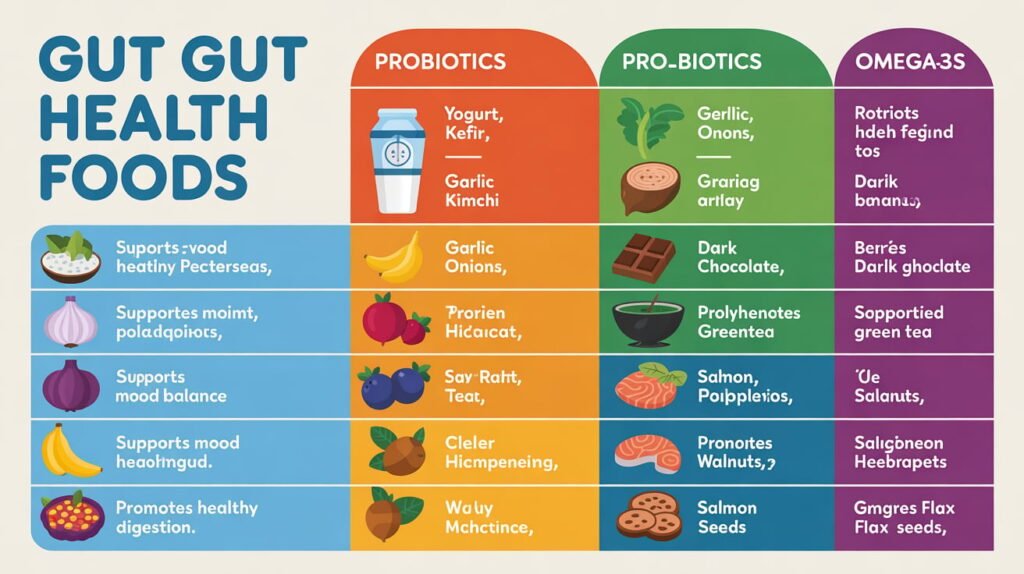
| Food Type | Gut-Brain Benefit | Examples |
| Probiotics | Restore gut flora balance, support mood | Yogurt, kefir, kimchi |
| Prebiotic Fiber | Feed healthy bacteria, improve digestion | Bananas, onions, oats |
| Polyphenols | Reduce inflammation, support neurotransmitters | Green tea, berries, cocoa |
| Omega-3 Fatty Acids | Support brain function and serotonin levels | Salmon, chia seeds, walnuts |
Can Supplements Help With Gut Health?

Supplements can complement a fiber-rich diet but are not replacements. Gut health supplements for mood like probiotics, prebiotic powders, or omega-3 capsules enhance gut microbiome and brain function. Always consult a healthcare provider to ensure proper dosage and compatibility with any medications. Studies confirm that targeted supplementation improves gut bacteria affect emotions, healthy digestion and mood balance, and reinforces the brain-body wellness connection.
Natural Ways to Strengthen the Gut-Brain Connection
Simple daily habits support holistic gut care. Deep breathing, yoga, and mindfulness calm the nervous system and improve vagus nerve and anxiety regulation. Regular movement and hydration maintain digestive tract health, while diet to support gut-brain axis ensures beneficial bacteria flourish. Even small, consistent choices like adding fiber-rich foods or fermented snacks can profoundly enhance gut microbiome and brain function, reducing stress and anxiety naturally.
The Future of Gut-Brain Research
Emerging studies focus on psychobiotics, microbiome therapy, and integrative medicine. Researchers are exploring how specific gut bacteria strains can alleviate gut inflammation and depression or enhance mental wellness. Future therapies may allow personalized gut health and mood connection plans based on microbiome profiles. This evolving field promises to expand understanding of brain-gut communication and offer innovative strategies to improve mental health through diet and lifestyle.
Final Thoughts — Heal Your Gut, Heal Your Mind
Your gut and mental health connection is powerful. By fostering healthy digestion and mood balance, you strengthen both mind and body. Prioritizing nutrition for emotional wellbeing, fermented foods for digestion, and natural ways to boost gut flora can elevate mental wellness, reduce stress and anxiety, and support long-term health. Remember, a nourished gut creates a calmer, clearer, and more resilient mind.
FAQs
How does the gut affect mental health?
The gut communicates with the brain through the gut-brain axis, influencing mood, stress levels, and mental wellness. Imbalances in gut bacteria can affect serotonin and dopamine, leading to anxiety or low mood.
What are the symptoms of a bad gut?
Common signs include bloating, digestive discomfort, fatigue, brain fog, low mood, anxiety, and irregular sleep. Persistent gut issues often signal an imbalanced microbiome or gut inflammation.
What emotions are trapped in the gut?
Feelings like anxiety, fear, stress, and tension can manifest physically in the gut, creating butterflies, knots, or discomfort, due to the vagus nerve and mind-body connection.
How do I reset my gut?
Resetting the gut involves eating fiber-rich and fermented foods, taking probiotics, staying hydrated, reducing stress, and maintaining consistent sleep and exercise for optimal gut flora balance.