Table of Contents
Introduction
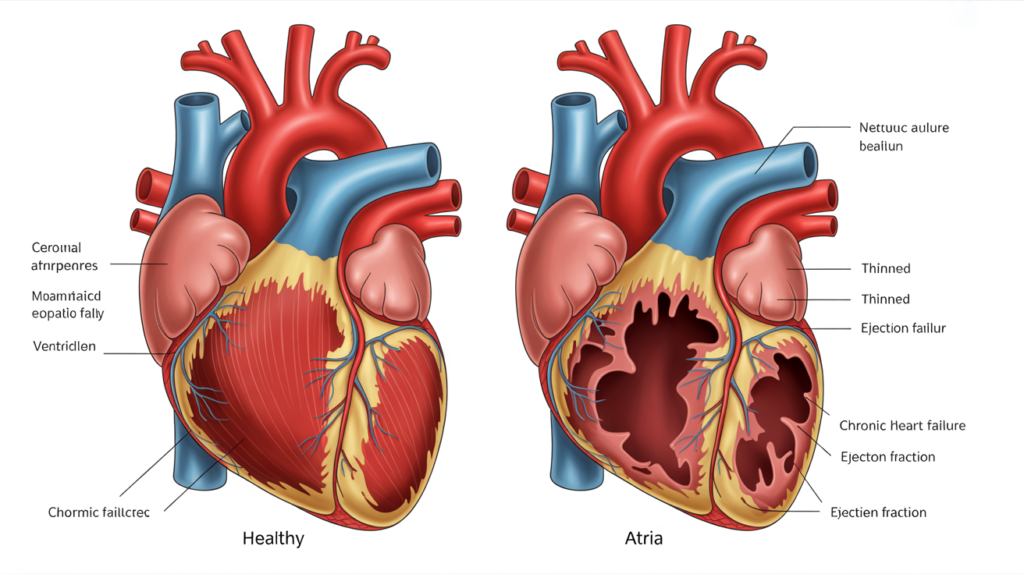
Understanding the difference between a heart attack vs. heart failure is essential for protecting your heart and recognizing danger signs early. Both are serious cardiovascular conditions, yet they develop in very different ways. A heart attack occurs suddenly when blood flow to the heart is blocked, often leading to heart muscle damage if not treated immediately.
On the other hand, heart failure is a chronic condition requiring long-term management, where the heart gradually loses its ability to pump effectively. Recognizing the heart attack symptoms and heart failure symptoms can save lives and guide you toward timely medical care.
What Is a Heart Attack?
A heart attack, also called myocardial infarction, happens when blood flow to the heart is blocked suddenly. This blockage usually comes from plaque buildup in coronary arteries, stopping oxygen-rich blood from reaching heart tissue. Without oxygen, cells begin to die. This causes immediate and often permanent heart muscle damage.
This event is an emergency heart condition because every minute matters. Doctors often say time is muscle. The longer reduced blood flow to the heart continues, the higher the risk of death or disability. Many people underestimate symptoms, yet fast care can reopen blocked coronary arteries and limit lasting harm.
What Is Heart Failure?
Heart failure does not mean the heart stops. Instead, the heart becomes too weak or stiff to pump blood well. This is known as chronic heart failure, a form of long-term heart disease that worsens slowly. The body still gets blood, but not enough for daily needs.
Over time, poor heart pumping ability leads to fluid buildup and exhaustion. Unlike a heart attack, heart failure develops gradually. However, flare-ups can happen suddenly. This makes it a chronic condition requiring long-term management, not a one-time event.
Heart Attack vs. Heart Failure: Key Differences Explained
The biggest difference is speed. A heart attack strikes fast. Heart failure creeps in quietly. Sudden cardiac symptoms mark heart attacks, while heart failure reflects progressive heart disease that unfolds over months or years.
Causes also differ Heart attacks stem from clots and ruptured plaques. Heart failure often follows heart damage from previous cardiac events, including heart attacks. Outcomes vary too. A heart attack may heal. Heart failure requires lifelong care and monitoring.
Common Causes and Risk Factors
Heart attacks are linked to plaque buildup in coronary arteries, smoking, high cholesterol, and stress. These factors narrow vessels until blood flow to the heart is blocked. Once a clot forms, damage begins within minutes.
Heart failure often starts after repeated strain. High blood pressure, diabetes, and obesity weaken the heart over time. Many patients face a risk of heart failure after a heart attack, especially when recovery care is delayed or incomplete.
Symptoms of a Heart Attack You Should Never Ignore
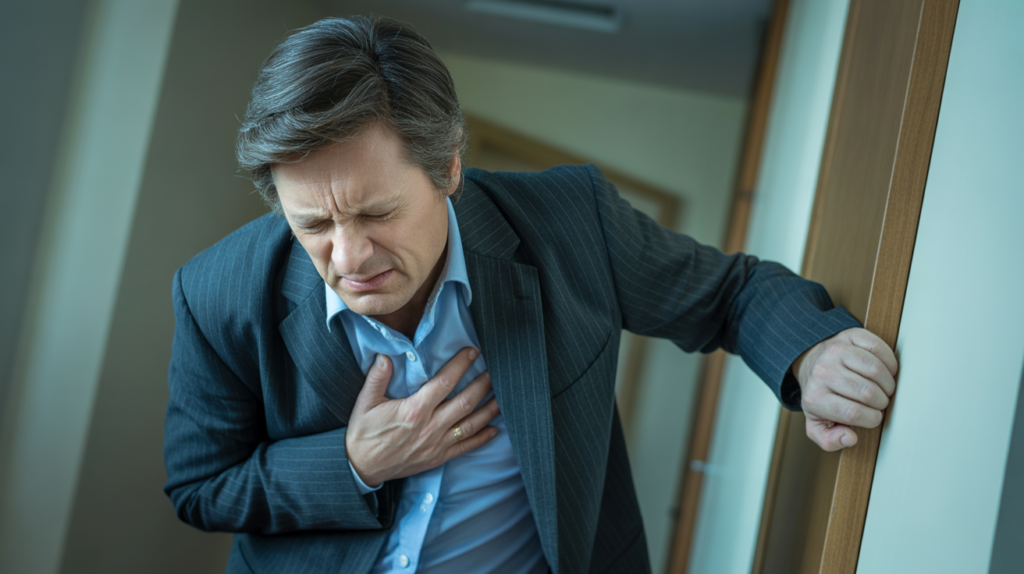
Classic Heart attack symptoms include Chest pain or chest discomfort that feels crushing or tight. Many describe sudden onset chest pressure that lasts several minutes. This pain may fade, then return stronger.
Other signs include radiating pain to the arm, jaw, or back; shortness of breath; and cold sweats and dizziness. Some experience nausea or sudden fear. These signs mean emergency medical attention is required. Always remember to call 911 for severe chest pain.
Symptoms and Types of Heart Failure
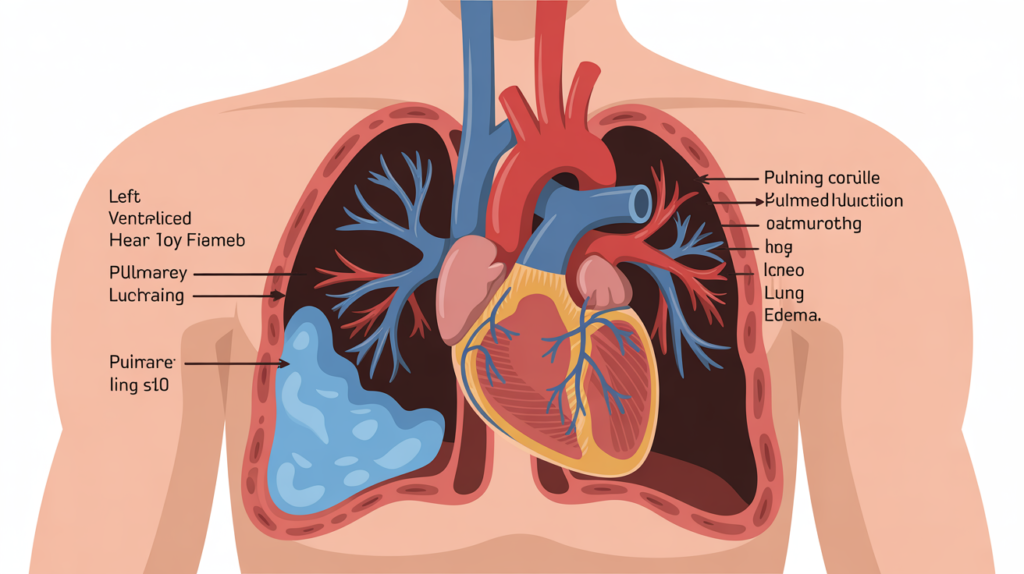
Heart failure symptoms often begin with breathlessness. You may notice difficulty breathing during mild activity or when lying flat. Fatigue increases as tissues receive less oxygen. Daily tasks feel heavier than before.
Fluid problems are common. Left-sided heart failure causes fluid buildup in lungs, leading to coughing at night. Right-sided heart failure causes swelling in the legs and abdomen from poor circulation and fluid leakage.
How Heart Conditions Are Diagnosed
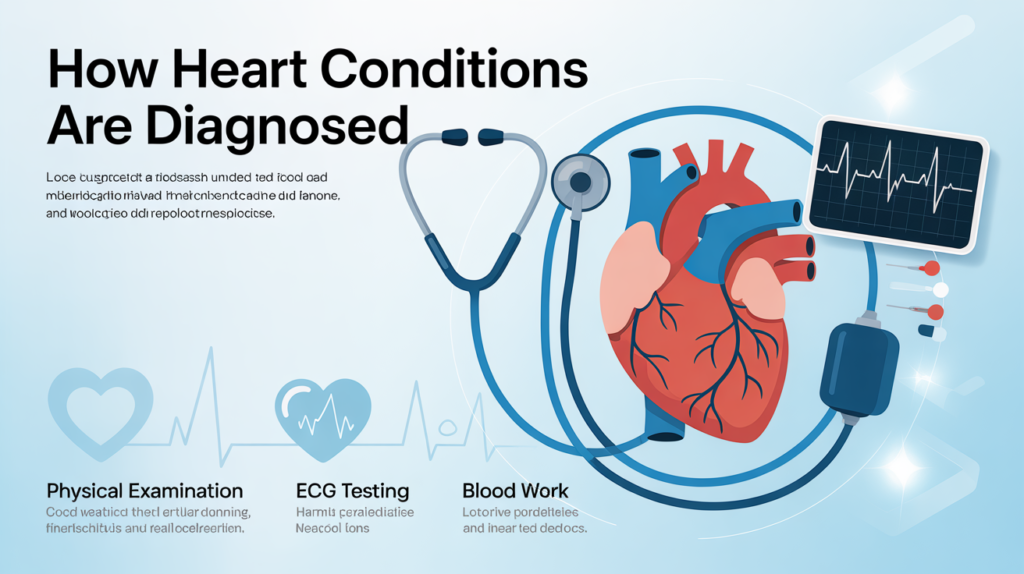
Doctors start by listening to your story. Medical history reveals patterns of pain, breathlessness, or fatigue. Physical exams check swelling, heart sounds, and oxygen levels. These clues guide further testing.
Next come medical imaging and diagnostic tests. ECGs reveal rhythm issues. Echocardiograms show pumping strength. Blood tests detect injury markers. Together, they confirm damage and guide treatment decisions.
Treatment Options for Heart Attack and Heart Failure
Heart attack treatment focuses on speed. Doctors dissolve clots or open arteries using procedures. Oxygen and medications protect tissue and restore flow. Quick care reduces cardiac complications and improves survival.
Heart failure treatment targets balance. Medications to improve heart function reduce strain and fluid. Lifestyle shifts matter deeply. Some patients need implanted cardiac devices to steady rhythm or assist pumping long-term.
Heart Attack, Heart Failure, and Cardiac Arrest: How They Differ
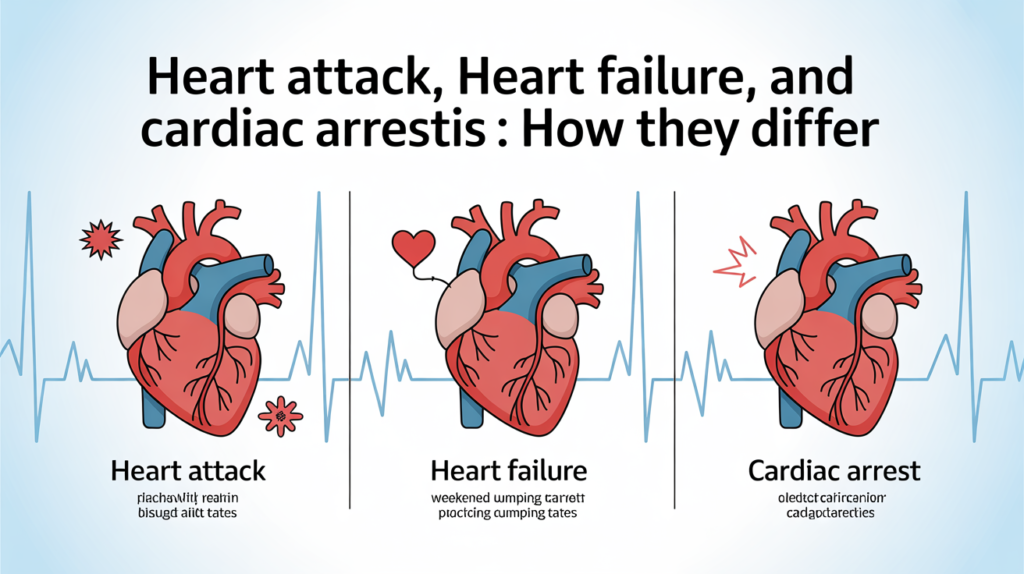
These terms often get mixed up. A heart attack is a blockage problem. Heart failure is a pumping problem. Cardiac arrest is an electrical failure causing sudden collapse.
Cardiac arrest happens without warning. Breathing stops. The heart quivers. Immediate CPR saves lives. Unlike heart failure, arrest strikes instantly and demands emergency action within seconds.
When to See a Doctor and What to Do Next
Never wait with chest pain. Heart-related chest pressure lasting minutes needs emergency care. Sudden breathlessness or fainting also signals danger. Acting early prevents irreversible harm.
Call your doctor for ongoing swelling, fatigue, or weight gain. These show progressive worsening of symptoms. Early care slows decline and improves daily
Protecting Your Heart Health
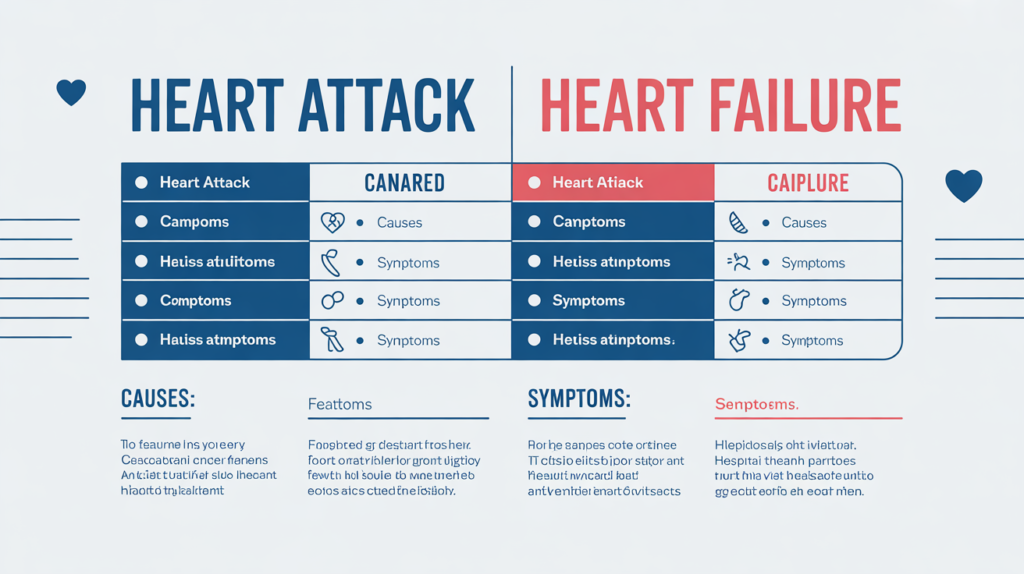
Knowing Heart Attack vs. Heart Failure: Symptoms, Causes, and Key Differences gives you power. One is sudden and deadly. The other is slow and demanding. Both require respect and awareness.
Prevention matters. Healthy eating, movement, and stress control protect your heart. Regular checkups catch changes early. Your heart works nonstop. Caring for it should never wait.
- Comparison Table: Heart Attack vs. Heart Failure
| Feature | Heart Attack | Heart Failure |
| Onset | Sudden | Gradual |
| Main Cause | Blocked coronary arteries | Weak or stiff heart |
| Key Risk | issue death | Fluid overload |
| Primary Danger | Immediate death | Long-term decline |
| Treatment Focus | Emergency reopening | Ongoing management |
What is the difference between a heart attack and heart failure?
A heart attack is a sudden emergency heart condition caused by blocked coronary arteries that stop blood flow to the heart, leading to heart muscle damage. Heart failure is a chronic condition requiring long-term management, where the heart becomes too weak or stiff to pump blood effectively.
What are the common symptoms of a heart attack?
Heart attack symptoms include chest pain or chest discomfort, sudden onset chest pressure, radiating pain to the arm, jaw, or back, cold sweats and dizziness, shortness of breath, nausea, and fatigue. Symptoms may be more subtle in women or occur as silent heart attacks.
How can you recognize heart failure symptoms?
Heart failure symptoms include shortness of breath, fatigue and weakness over time, difficulty breathing during mild activity, swelling in legs and abdomen, fluid retention and rapid weight gain, and inability to lie flat due to breathing issues. Early recognition helps prevent progressive worsening of symptoms.
Can a heart attack lead to heart failure?
Yes, a heart attack can cause heart damage from previous cardiac events, reducing heart pumping ability and increasing the risk of heart failure after a heart attack. Timely treatment and lifestyle changes for heart health reduce long-term complications.
When should I call 911 for heart-related symptoms?
Call 911 for severe chest pain, sudden cardiac symptoms, radiating pain to the arm, jaw, or back, or shortness of breath. Immediate action can prevent oxygen deprivation of heart tissue and reduce cardiac complications.