
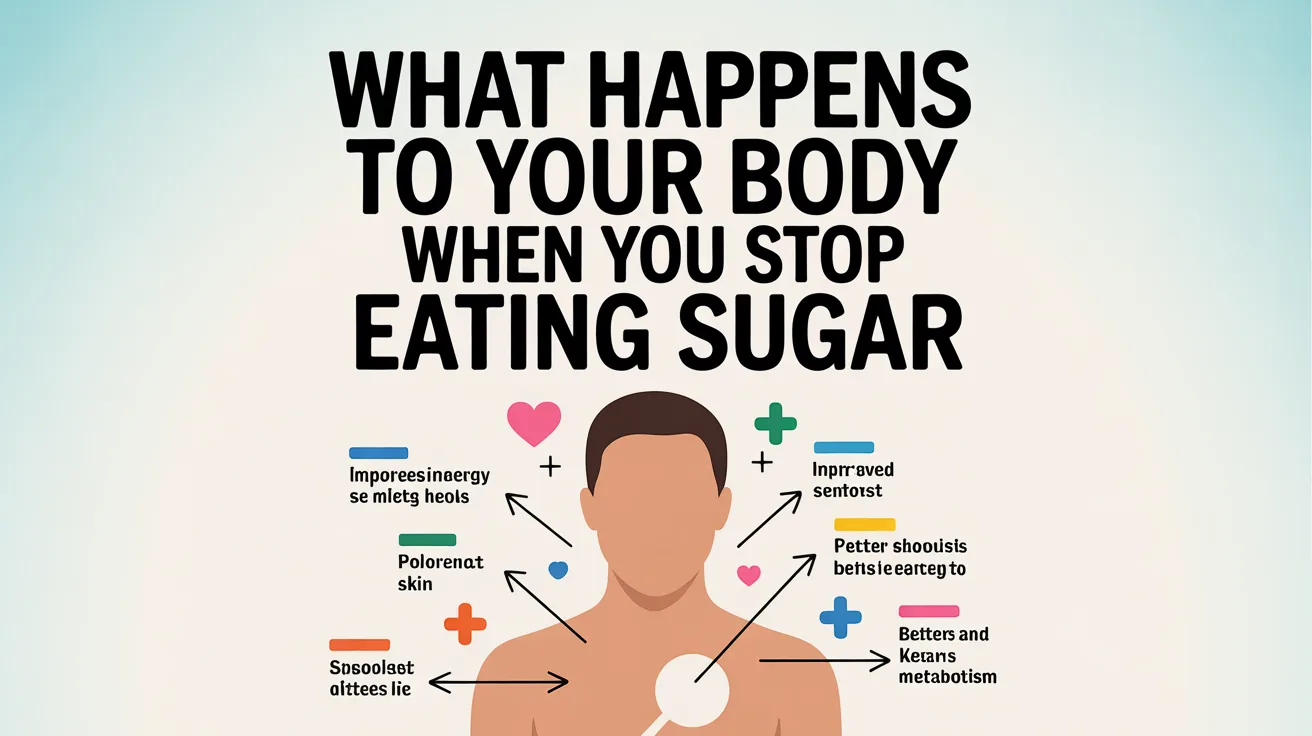
You might think quitting sugar is simple. However, once you actually try to stop eating sugar, your body reacts in surprising ways. This guide explains what happens when you stop eating sugar using real science and practical insights.
Let’s walk through the physical and mental transformation step by step so you understand the true quitting sugar benefits and how your body adapts.

Understanding Sugar: Types, Sources, and Hidden Forms
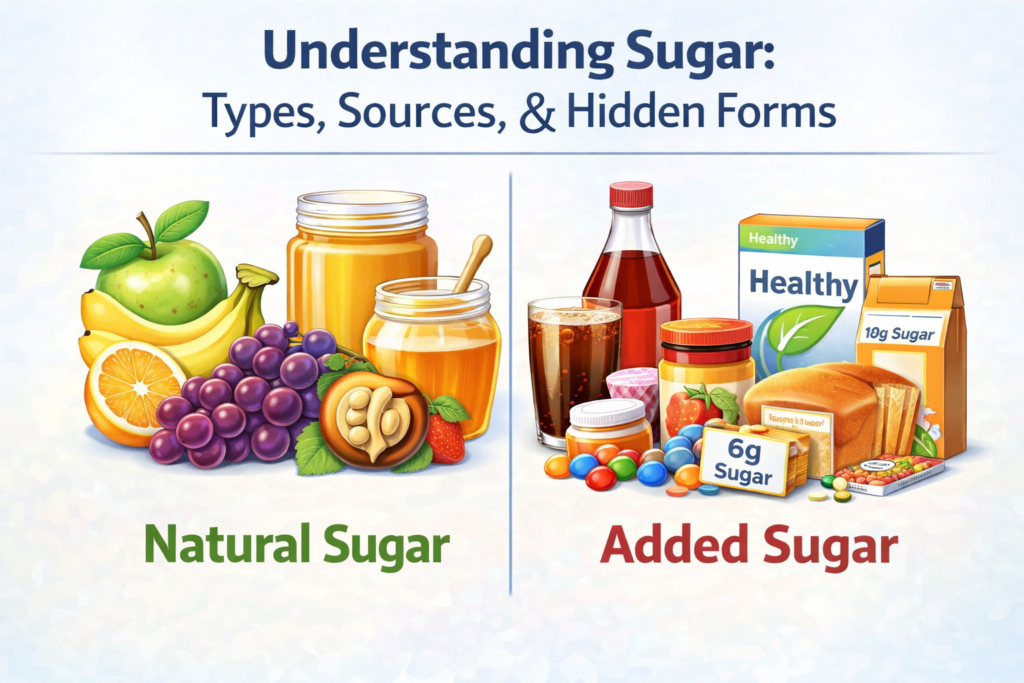
Sugar can be easily overlooked. You already know about sweets, yet many foods contain invisible sugar. When you reduce sugar intake, you begin noticing labels differently. Packaged sauces, breads, and even “healthy” snacks often contain hidden sugars that quietly affect your blood sugar levels.
However, not all sugar behaves the same. Natural sugars from fruits digest slowly, while refined ones spike energy quickly. These spikes contribute to added sugar effects, increasing insulin resistance and harming gut health over time. That’s why modern diets silently fuel a growing sugar addiction.
How Sugar Affects Your Body Daily (Before You Quit)
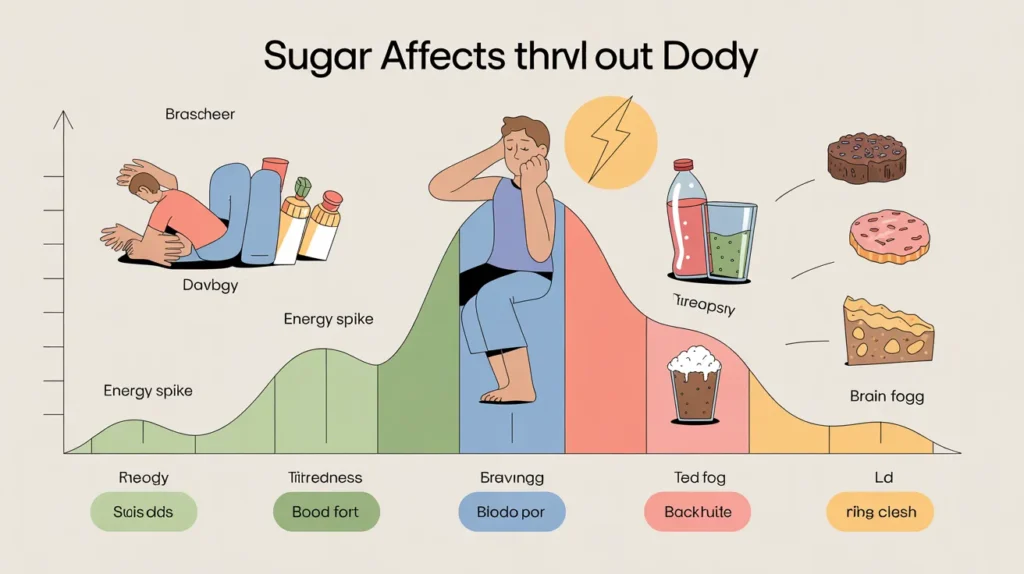
Your body runs on patterns. When you consume sugar daily, your blood sugar levels rise and crash repeatedly. This rollercoaster drains your energy levels and leaves you reaching for another quick fix. Over time, your body becomes dependent on sugar for instant energy.
Moreover, sugar impacts your brain chemistry. It triggers dopamine, creating pleasure and reinforcing sugar cravings. This cycle leads to mood swings, brain fog, and unstable focus. Many people are unaware that the effects of added sugar directly link to these symptoms.
What Happens to Your Body When You Stop Eating Sugar (Day-by-Day Timeline)
The first few days feel intense. When you begin a sugar detox, your body enters withdrawal mode. During the first 24–72 hours, you may feel tired, irritable, or unfocused. These are classic sugar withdrawal symptoms, showing your body is adjusting to lower sugar intake.
After a week, things shift. Your mental clarity improves and your energy levels stabilize. Over time, your body adapts fully. You experience inflammation reduction, improved digestion, and better hormonal balance. This is the real transformation behind what happens when you stop eating sugar.
10 Powerful Benefits of Cutting Out Sugar
The benefits go beyond weight. When you stop eating sugar, your body begins healing internally. You may notice weight loss, clearer skin, and better digestion. Your metabolism becomes more efficient, leading to a natural metabolism boost without extreme dieting.
Even more impressive, your emotional state improves. Stable blood sugar supports consistent energy and fewer mood swings. Your brain functions better, reducing brain fog and enhancing focus. These are long-term quitting sugar benefits that improve daily life.
Are There Any Side Effects of Quitting Sugar?
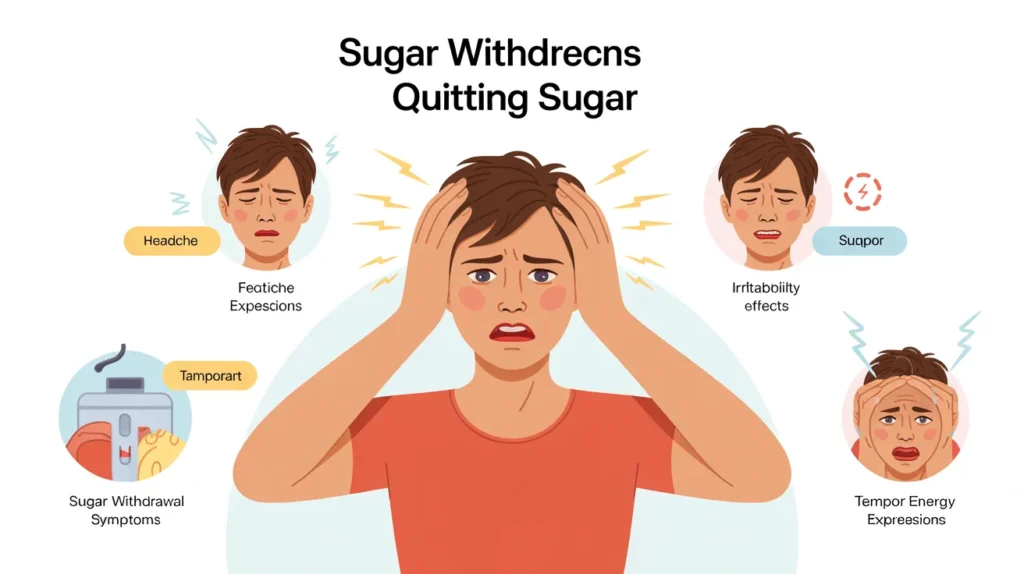
Let’s be honest. The beginning isn’t easy. When you start a no-sugar diet, your body reacts strongly. You might experience headaches, fatigue, or irritability. These sugar withdrawal symptoms happen because your brain misses quick dopamine spikes.
However, these effects are temporary. Most symptoms fade within a few days. As your body stabilizes, your energy levels improve and cravings reduce. Understanding this phase helps you stay consistent while your body adapts to a healthier state.
The Science Behind Sugar Addiction and Cravings
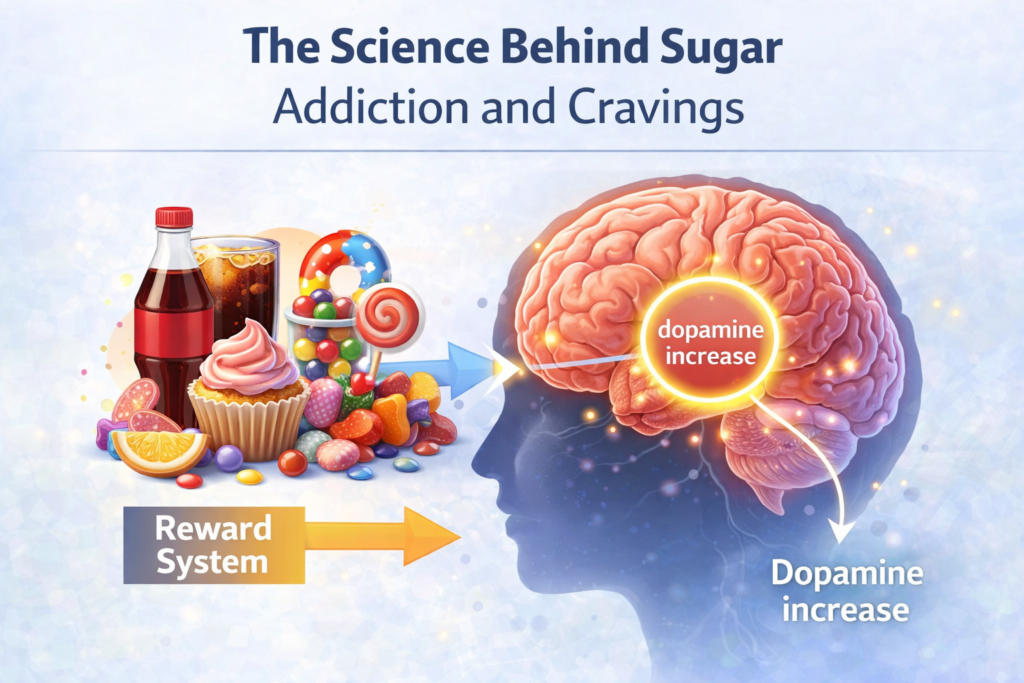
Sugar affects your brain like a reward system. Each time you eat sugar, dopamine increases. This creates pleasure, reinforcing sugar addiction. Over time, your brain demands more sugar to feel the same reward, strengthening sugar cravings.
Additionally, poor nutrition worsens this cycle. Low protein intake leads to hunger, pushing you toward quick sugar fixes. This increases insulin resistance and disrupts blood sugar levels. Understanding this mechanism helps you break the habit more effectively.
Foods to Eat and Avoid on a No-Sugar Diet
Your success depends on food choices. When following a no-sugar diet, avoiding processed foods becomes essential. Sugary drinks, packaged snacks, and refined carbs contribute heavily to added sugar effects and damage long-term health.
At the same time, focus on nourishing foods. Whole meals with protein and healthy fats stabilize blood sugar levels and improve gut health. This approach reduces cravings naturally and supports sustainable energy throughout the day.
Foods to Avoid
Avoid items that spike glucose quickly. Processed snacks, sodas, and hidden sugars disrupt energy levels and increase inflammation reduction challenges. These foods feed the cycle of sugar cravings and make quitting harder.
Foods to Eat
Choose real foods. Lean proteins, vegetables, and healthy fats help balance hormones. These foods support mental clarity, reduce cravings, and improve digestion. They also help maintain stable energy while transitioning away from sugar.
How to Break a Sugar Addiction (Proven Strategies)
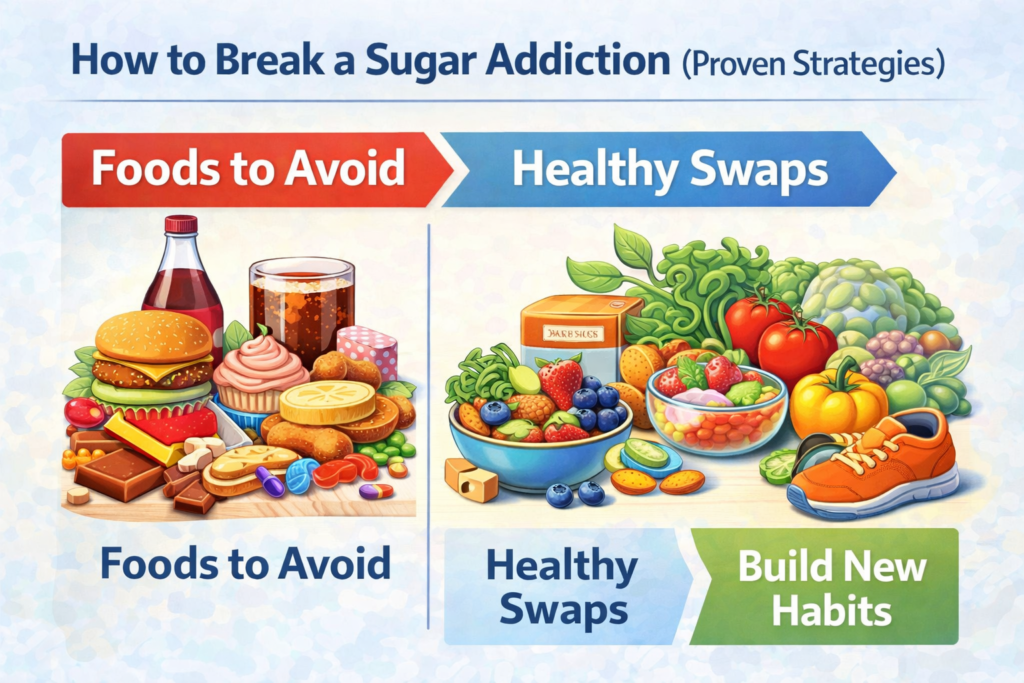
Breaking sugar addiction requires strategy. Some people quit suddenly, while others prefer gradual reduction. Both methods work, but consistency matters most. Replacing sugar with healthier alternatives helps reduce cravings without feeling deprived.
Building new habits is key. Regular meals with protein stabilize blood sugar levels and prevent energy crashes. Over time, your taste buds adapt. You begin enjoying natural sweetness, making it easier to reduce sugar intake permanently.
30-Day No Sugar Challenge: What to Expect
A 30-day sugar detox can reset your body. During the first week, withdrawal symptoms may appear. However, by the second week, your energy levels improve and cravings decrease significantly.
By the end of the month, results become visible. You may notice weight loss, better skin, and improved focus. This challenge highlights the long-term quitting sugar benefits and helps build a healthier relationship with food.
| Week | What You Feel | Body Changes |
| Week 1 | Cravings, fatigue | Detox begins |
| Week 2 | More energy | Stable blood sugar |
| Week 3 | Better focus | Reduced inflammation |
| Week 4 | Balanced mood | Improved metabolism |
How Much Sugar Is Actually Healthy? (Expert Guidelines)
Balance matters. Experts recommend limiting sugar instead of eliminating it completely. Around 25 grams daily is considered safe for most people. This helps maintain healthy blood sugar levels without triggering insulin resistance.
However, moderation is key. Occasional treats are fine when combined with a balanced diet. The goal is not perfection but control. By managing intake, you avoid extreme cravings and maintain long-term health without falling back into sugar addiction.
Final Thoughts
Quitting sugar is not just a diet change. It’s a lifestyle shift. When you understand what happens when you stop eating sugar, you gain control over your health. From improved mental clarity to better gut health, the transformation is real.
Start small. Stay consistent. Over time, your body adapts, and the benefits become undeniable.