
Introduction
Modern life rarely slows down, and your body often carries the silent weight of deadlines, screens, and constant noise. This guide to 7 Quick Stretches for Stress Relief You Can Do Right Now invites you to pause, breathe, and reconnect with yourself in just a few mindful minutes. You will discover stretches for anxiety relief that feel gentle yet powerful, movements that encourage nervous system regulation, and simple actions that improve mental calm and focus. As your body opens, your breath deepens, boosting circulation and oxygen flow and building strong daily wellness habits you can carry from morning meetings to quiet evenings at home for lasting peace each single day.
Stress can sneak into your body like an uninvited guest. You feel it in your shoulders, your lower back, and even in your breathing. However, you do not need a gym or special tools to feel better. This guide to 7 Quick Stretches for Stress Relief You Can Do Right Now shows you how simple movement can bring calm, clarity, and comfort into your day.
How Stress Affects Your Body and Nervous System
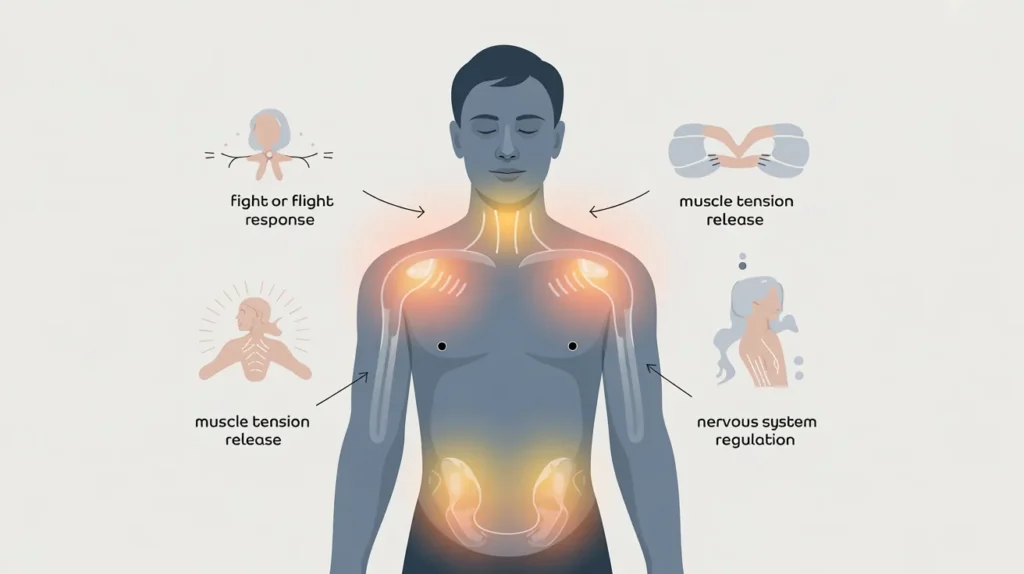
Stress begins in your mind but settles into your body. Your brain releases hormones that prepare you for action. This process is part of the fight-or-flight response. However, when this state lasts too long, your muscles stay tight and your breathing becomes shallow. Over time, this tension can weaken your mind-body connection and reduce your sense of ease.
Your body also feels the weight of modern habits. Long hours of sitting create sedentary lifestyle effects that lead to stiff hips, rounded shoulders, and sore necks. These patterns trap emotional stress in the body and make relaxation harder. That is why gentle movement supports nervous system regulation and brings real physical and mental health benefits when practiced daily.
Why Stretching Is One of the Fastest Ways to Calm Your Mind
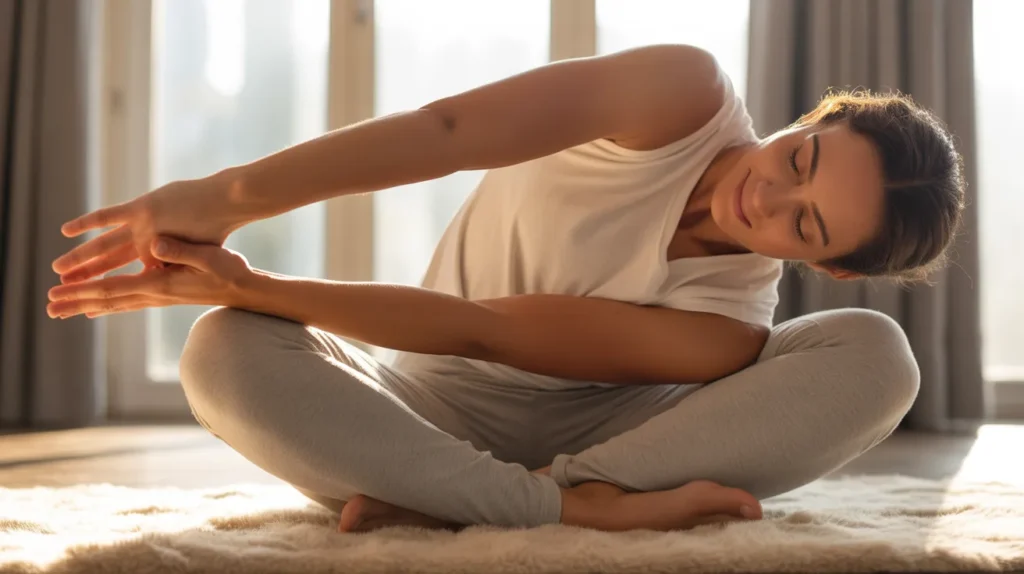
Stretching gives your brain a clear message that it is safe to relax. Slow breathing and smooth motion activate your breathing and relaxation response. This allows better circulation and oxygen flow to reach your muscles and your brain. As a result, your thoughts feel lighter, and your body feels warmer and more open.
Many people discover that relaxation through stretching feels like a mental reset button. Gentle poses can lower stress hormones through natural cortisol reduction strategies. This is why daily stretching for mental health has become a popular habit for people who want steady energy and emotional balance throughout busy days.
How to Prepare Your Body for Stress-Relief Stretches Safely
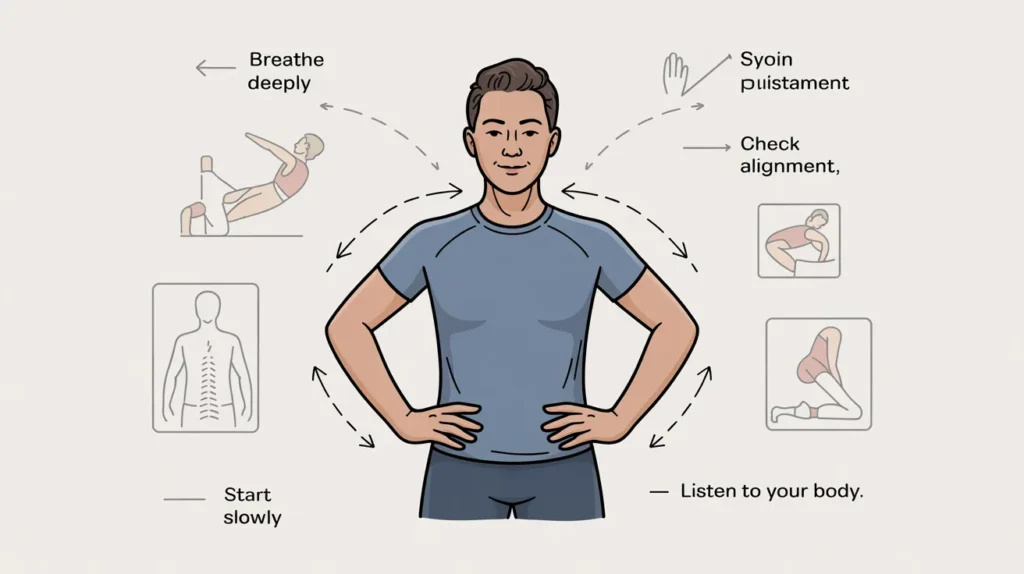
Before you begin any movement, take a moment to notice how you sit or stand. Good posture helps your body move without strain. Simple posture correction methods like keeping your chin level and your shoulders relaxed can prevent discomfort. This small step protects you from injury and helps you feel more grounded.
Your breathing sets the tone for your practice. Slow breaths in through the nose and out through the mouth support gentle movement therapy. If you feel pain instead of a stretch, pause and adjust. Safety comes from listening to your body and choosing stress management techniques that feel supportive rather than forced.
Child’s Pose for Instant Grounding and Emotional Release
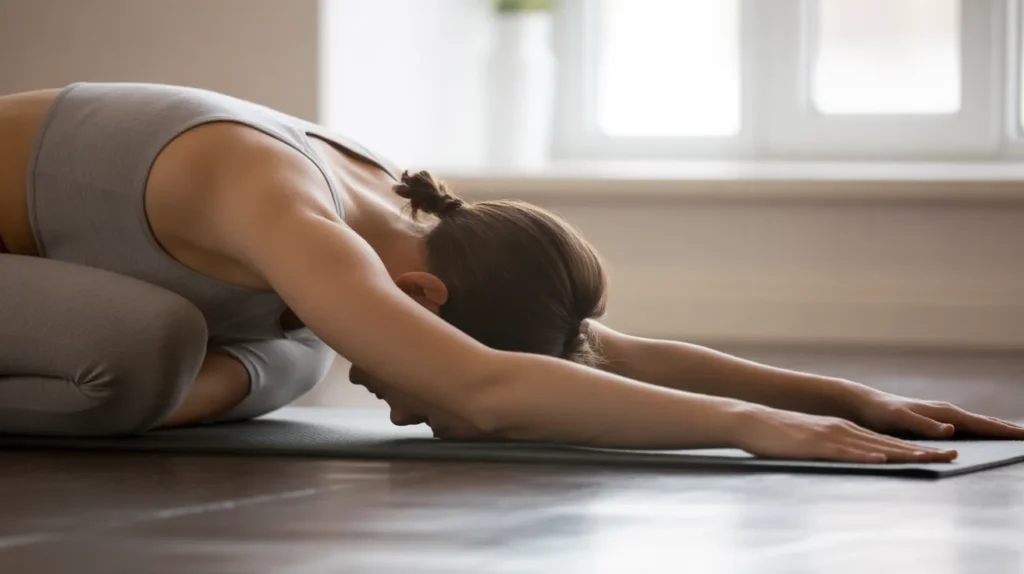
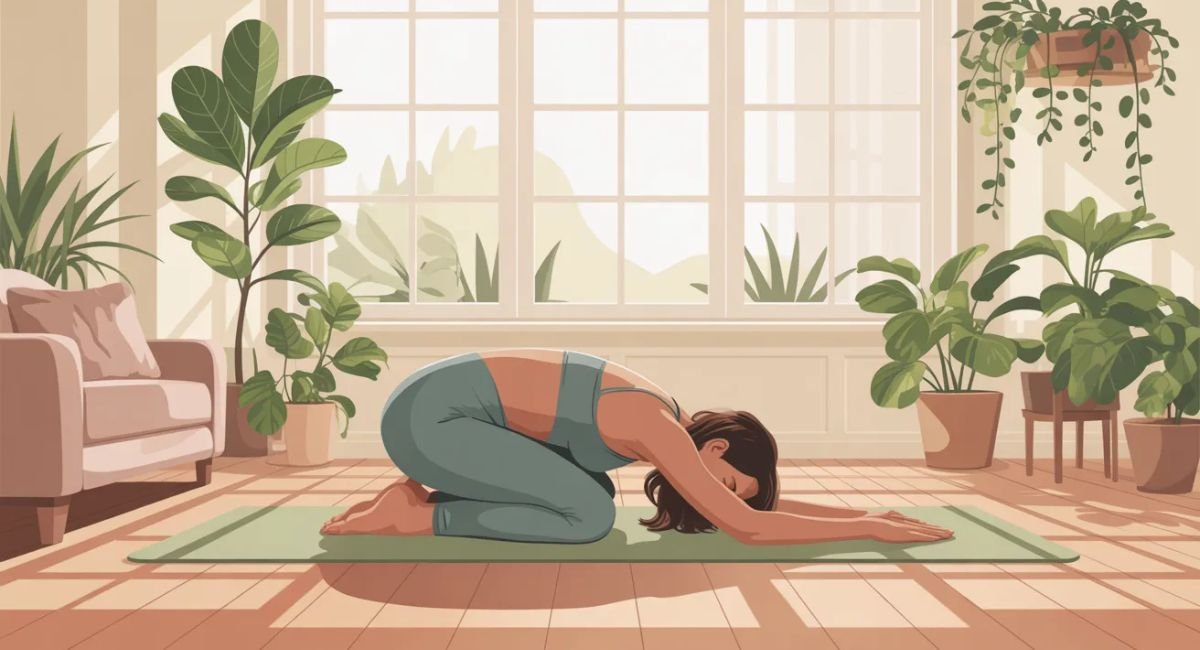
Child’s Pose feels like giving your nervous system a soft place to land. You kneel, fold forward, and let your forehead rest. This position gently lengthens the spine and encourages muscle tension release in the lower back and shoulders. Many people notice a deep sense of calm after just a few slow breaths.
This stretch also supports sleep quality improvement when practiced in the evening. The forward fold signals your body to slow down and prepare for rest. Over time, this simple pose can become one of your favorite stretches for anxiety relief during long or emotional days.
Seated Spinal Twist to Release Tension Stored in the Back
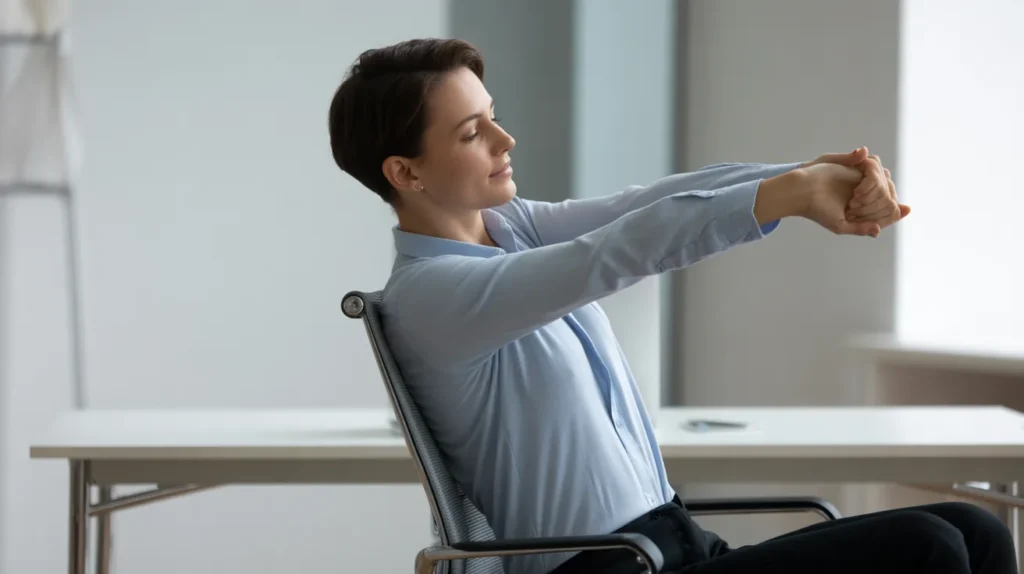
A seated twist is easy to do at home or at work. You sit tall and gently rotate your torso to one side. This motion supports spinal mobility health and encourages fresh blood to move through your back and belly. Many people feel lighter after a few slow turns.
This pose offers strong spinal twist stretch benefits for digestion and posture. It also works as one of the best desk stretches for work stress. You can practice it during a short break and return to your tasks with renewed mental calm and focus.
Happy Baby Pose for Hip Relaxation and Nervous System Reset
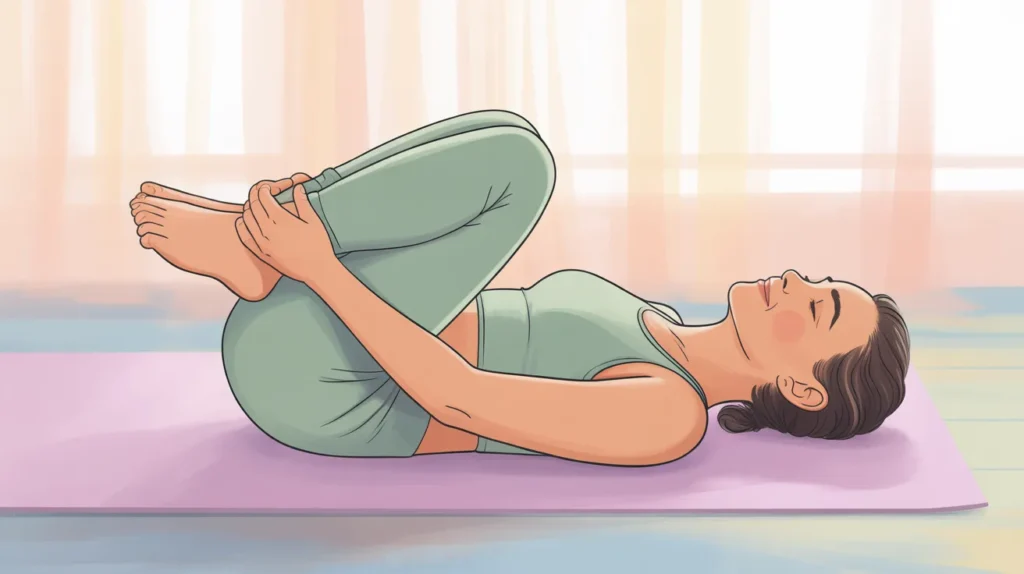
Happy Baby Pose invites your body to relax in a playful way. You lie on your back and hold your feet or legs while gently rocking. This movement opens the hips and eases tight areas that often store tension. These hip-opening stretches can feel like a deep sigh for your lower body.
This pose also helps with lower back tension stretches by reducing pressure on the spine. Many people use it as a glute stretch for back pain before bedtime. The gentle motion encourages a sense of comfort and safety that supports better rest.
Chest and Shoulder Openers to Reverse Stress Posture
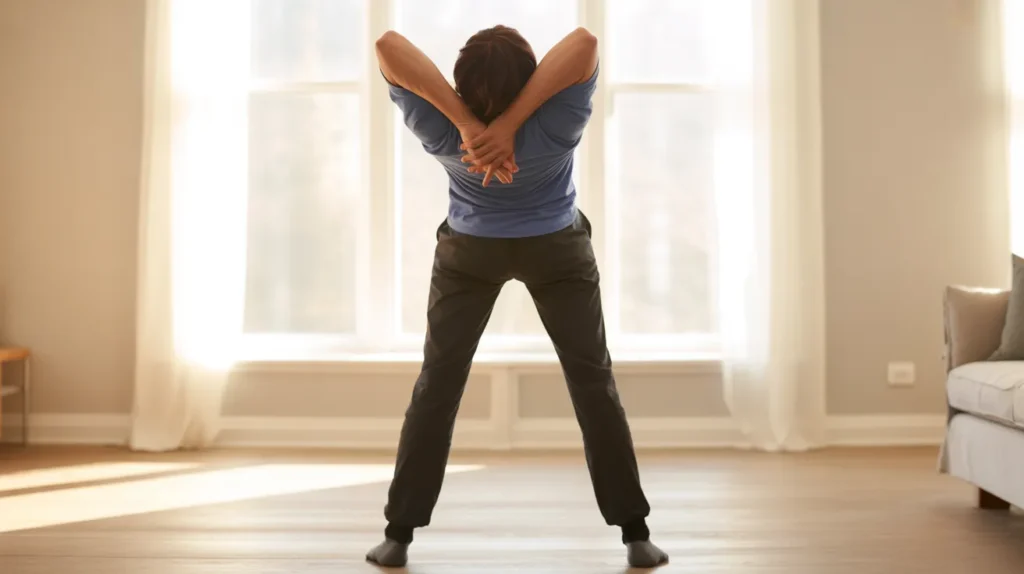
Modern life often pulls your shoulders forward and your head down. This posture limits breathing and energy. A chest opener helps reverse this pattern by lifting the heart and spreading the shoulders wide. This creates space for fuller breaths and improved circulation.
This stretch acts as a natural chest opener for posture and supports flexibility and mobility training for the upper body. Over time, it can reduce stiffness and promote confidence in how you stand and move during daily activities.
Neck and Upper Body Stretches for Mental Clarity
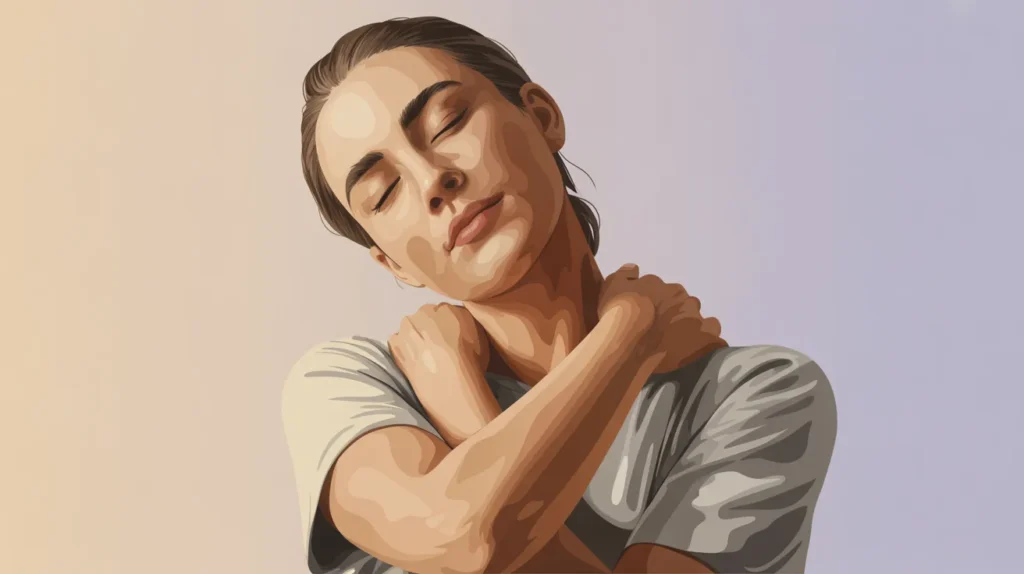
Neck tension often shows up as headaches or mental fog. Slow, gentle rotations release tight spots and improve comfort. These movements are simple but powerful for neck and shoulder pain relief during long hours of screen use.
This type of stretch also supports stress relief exercises at home because it requires little space or time. Many people notice better focus after a few slow movements. It feels like clearing a cloudy window in your mind.
How to Build a 5-Minute Daily Stress-Relief Stretch Routine
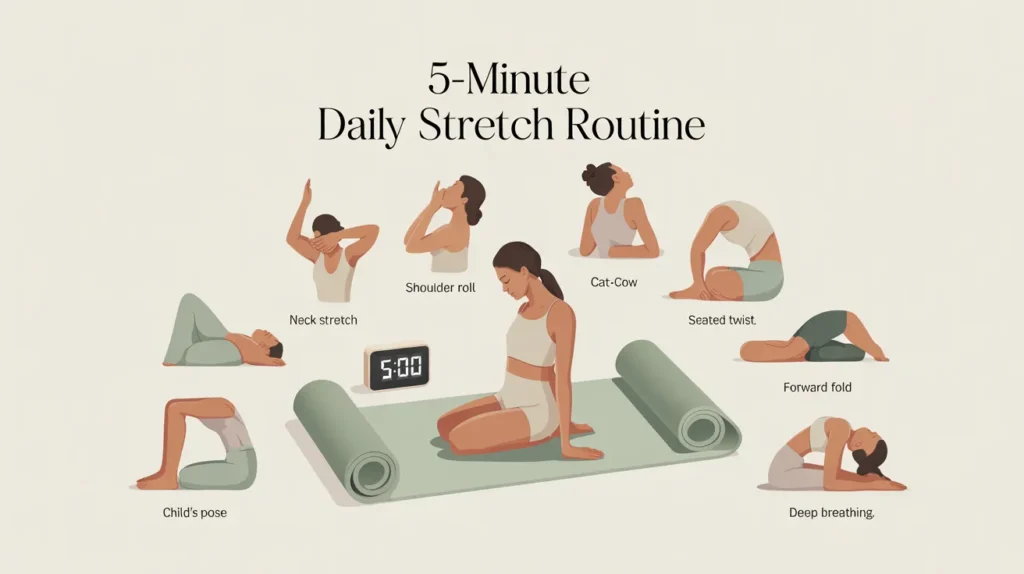
A simple routine can change how your whole day feels. A five-minute stretch routine in the morning can wake up your body and sharpen your attention. The same routine in the evening can help you unwind and prepare for rest.
Here is a simple table that shows how you can use the 7 Quick Stretches for Stress Relief You Can Do Right Now during different parts of your day.
| Time of Day | Focus Area | Benefit |
| Morning | Gentle movement and breathing | Boosts energy and clarity |
| Midday | Seated twists and neck stretches | Reduces work tension |
| Evening | Forward folds and Child’s Pose | Encourages relaxation |
Many people combine this flow with gentle yoga for stress and relaxation stretches before bed. Over time, these daily wellness habits build resilience and emotional balance.
Real-Life Insight and Simple Case Study
A remote worker from Texas shared how short stretch breaks changed her routine. She felt constant neck pain and low energy during long video calls. After using these calming stretches for tension twice a day, she noticed less discomfort and better focus within two weeks. Her experience highlights how small changes can create lasting comfort.
Helpful Facts About Stretching and Stress
Research shows that slow stretching can lower heart rate and improve mood. Health experts often link gentle movement with improved emotional balance and reduced anxiety. These benefits connect closely to daily stretching for mental health and overall wellness.
Here is a simple table of common benefits people report after regular practice.
| Benefit | What You May Feel |
| Relaxed muscles | Less stiffness and soreness |
| Better breathing | Deeper and slower breaths |
| Clearer thinking | Improved focus and mood |
A Final Word on Building Calm Into Your Life
The beauty of 7 Quick Stretches for Stress Relief You Can Do Right Now is their simplicity. You do not need special equipment or a perfect space. You only need a few minutes and a willingness to listen to your body.
Think of these stretches as small gifts you give yourself each day. They support comfort, clarity, and confidence. Over time, they become part of a lifestyle that feels lighter and more balanced, one gentle movement at a time.