
Table of Contents
Introduction
Evenings can feel loud inside your head. Thoughts race. Muscles cling to the day. This is where 6 Bedtime Yoga Poses That Relax Your Whole Body and Improve Sleep become powerful allies. A mindful bedtime yoga routine helps you slow down, breathe deeper, and reconnect with your body’s natural rhythm. Unlike intense workouts, gentle nighttime yoga meets you where you are. It uses calm movement, patience, and awareness. When you practice yoga before sleep, you invite stillness instead of stimulation. Over time, this practice teaches your body that nighttime means safety, rest, and restoration.
Many Americans search for ways to improve sleep quality naturally because exhaustion has become modern currency. Screens glow late. Stress lingers. However, relaxing yoga poses paired with mindful breathing create a reliable off-switch. These poses work quietly, yet deeply. They guide you into yoga for better sleep without pills or supplements. This article explains how each pose works, why it soothes your system, and how a simple nightly ritual can truly change your sleep.
Why Practicing Yoga at Night Improves Sleep Quality
Your nervous system decides how well you sleep. When stress stays high, your body remains alert long after bedtime. Gentle nighttime yoga helps calm the nervous system by slowing breath and heart rate. As movement softens, your body begins to activate the parasympathetic response, the state responsible for rest and repair. This shift helps reduce cortisol levels gradually and naturally.
Think of nighttime stretching for sleep as a bridge between activity and rest. Instead of collapsing into bed while wired, slow yoga movements gently prepare your muscles and brain for recovery. Over repeated nights, your body learns this pattern. Yoga becomes a signal. Your system understands it is time to prepare the body for rest and welcome sleep more easily.
Key Benefits of Bedtime Yoga for Mind and Body
The benefits reach far beyond flexibility. Yoga for relaxation works on emotional tension, mental noise, and physical fatigue together. Regular evening yoga practice supports better sleep without medication by teaching self-regulation. Your body becomes skilled at entering calm states naturally. This skill carries into daily life.
Emotionally, stress-relieving yoga offers quiet release. Muscles soften. Thoughts lose urgency. Over weeks, many people notice they promote deep sleep more consistently. This is not forced rest. It is natural sleep support built through repetition and trust in the process. These are simple yet profound relaxation techniques before sleeping that grow more effective with time.
Pose 1 – Child’s Pose for Full-Body Relaxation
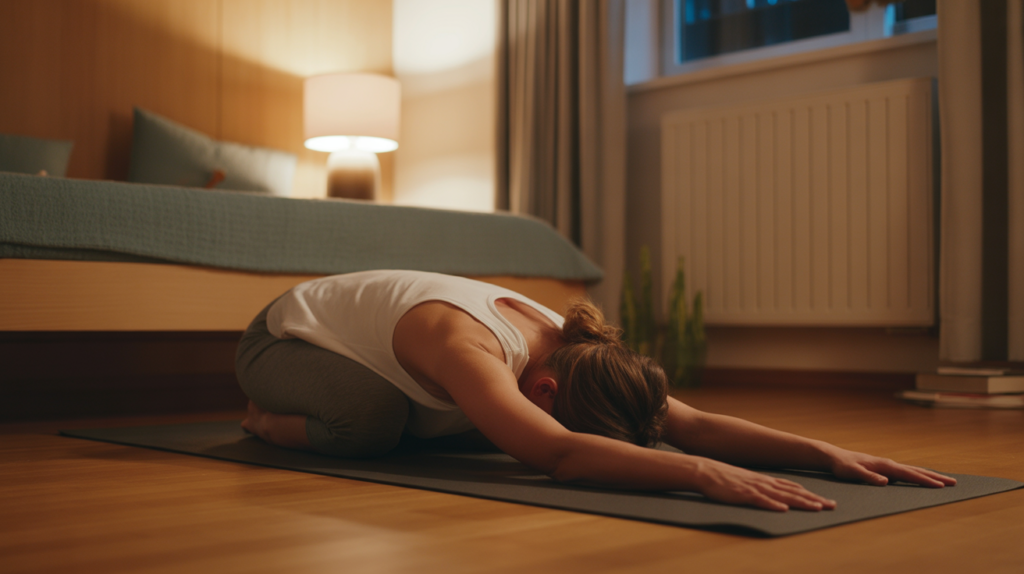
There is comfort in folding inward. Child’s Pose relaxation gently stretches hips, spine, and shoulders while your forehead rests down. This posture sends a clear safety signal to your brain. Muscles loosen without effort. Breath slows by itself. You feel grounded, almost held.
For many, this pose becomes emotional shelter after demanding days. Bedtime restorative yoga poses like this reduce nervous system noise. They are especially helpful for beginners because they demand nothing. You simply breathe. Over time, this pose becomes a doorway into yoga to calm the mind before sleep arrives.
Pose 2 – Supine Spinal Twist to Release Back and Hip Tension
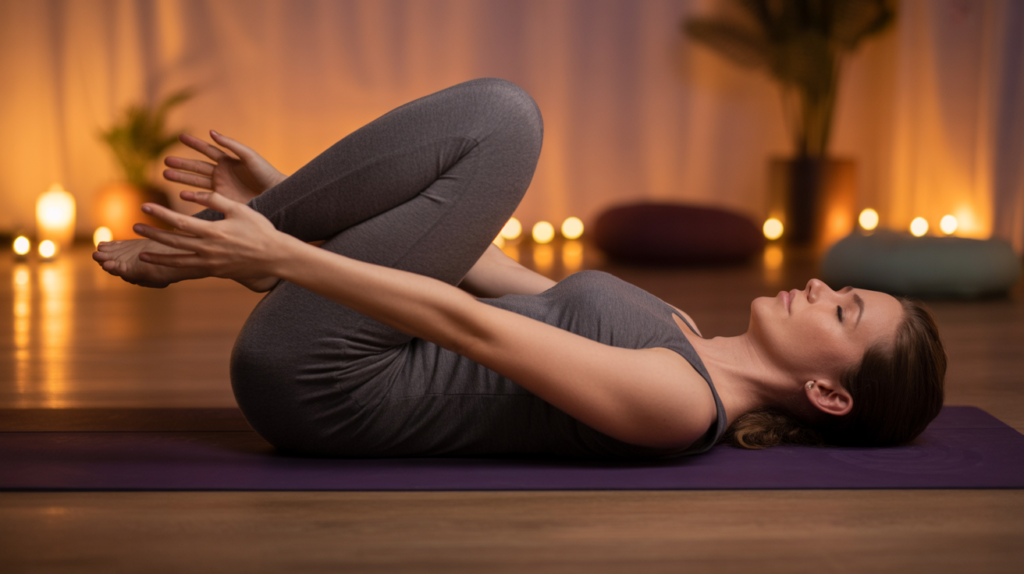
Twisting gently on your back unlocks areas that hold stress all day. The supine spinal twist benefits the spine, hips, and digestion together. This is important because digestion and sleep deeply influence each other. As your torso rotates, muscles unwind without strain.
This pose is ideal for desk workers. Yoga poses for office workers often focus on spinal mobility. Done calmly, twists become spine-relaxing yoga stretches that quiet nerve signals traveling upward. When the body unwinds, the mind follows. You begin feeling ready to rest rather than simply tired.
Pose 3 – Forward Fold for Calming the Nervous System
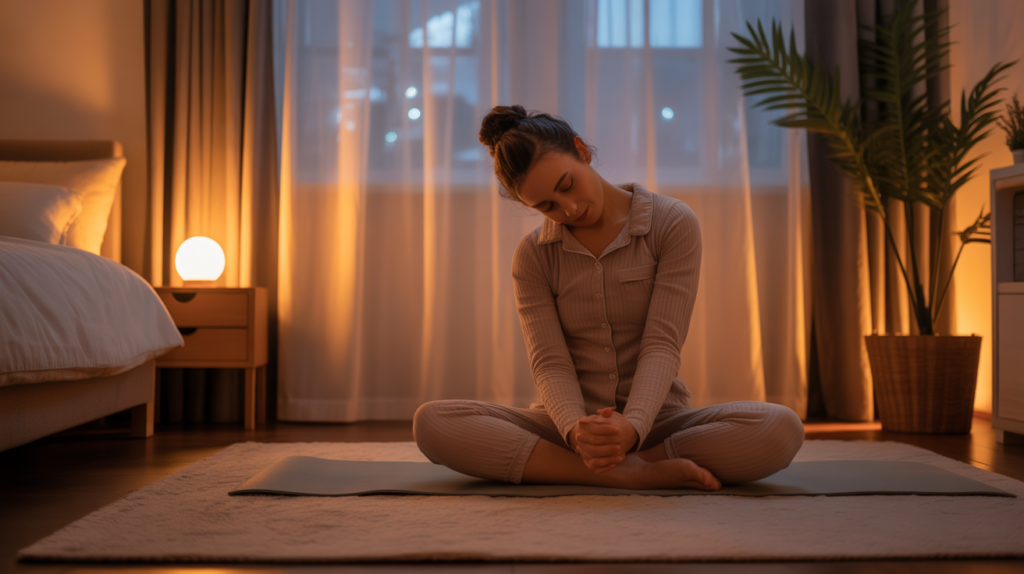
Forward folds are deeply introspective. A forward fold for stress relief gently brings attention inward. As your head lowers, blood flow shifts and your brain senses safety. Thoughts soften. Anxiety loses volume. Breathing deepens naturally.
This mild inversion helps with yoga for nervous system relaxation when thoughts spin at night. It is especially useful if your job demands constant alertness. Over time, this pose trains your body to release mental tension quickly. It becomes one of your most trusted relaxing bedtime stretches.
Pose 4 – Legs Up the Wall to Reduce Fatigue and Swelling
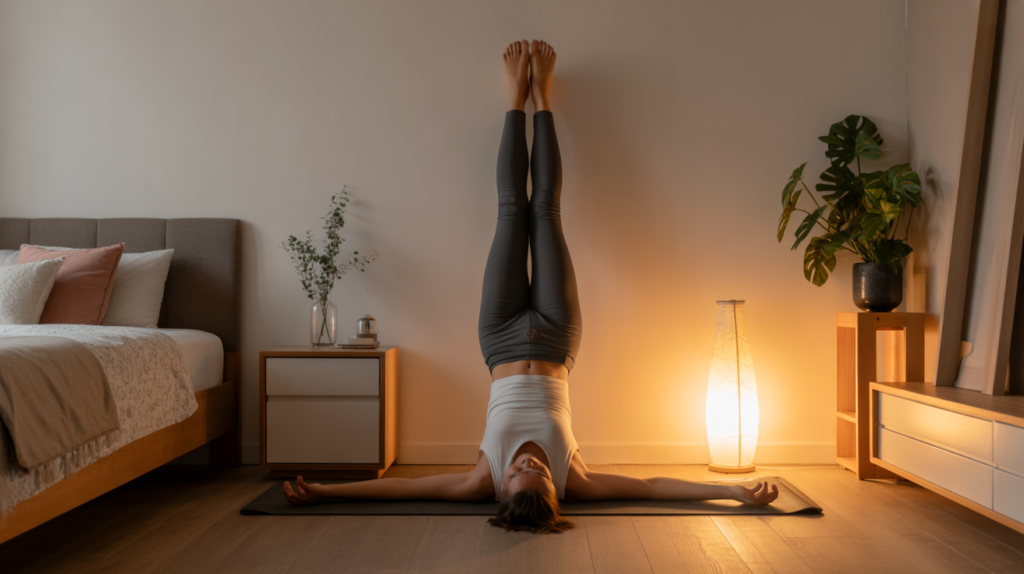
Few poses feel as effortless as this one. Legs up the wall for sleep reverses gravity gently. Blood flows away from tired feet and settles evenly. Swelling eases. Heart rate slows. This is low-impact yoga for relaxation at its finest.
The pose supports circulation and signals the body to enter recovery mode. Many find this practice essential for yoga for deep relaxation. It is perfect after long hours of standing or travel. The simplicity masks its power. Minutes here can reset your entire evening.
Pose 5 – Reclining Butterfly for Emotional and Physical Release
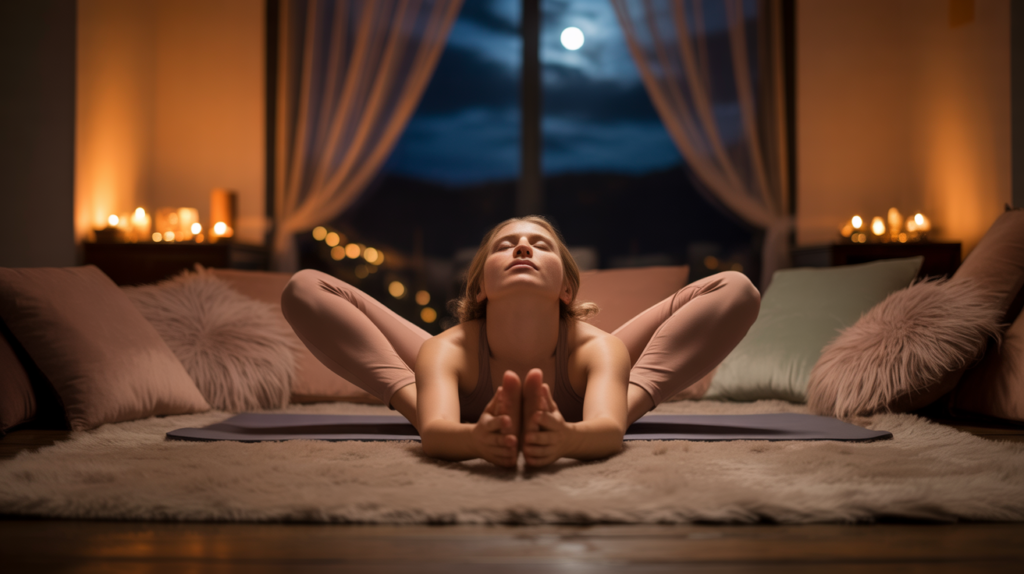
Hips store tension quietly. Reclining butterfly pose benefits include deep hip softening and emotional release. Knees open gently. Breath expands naturally into the belly. There is nothing forced here. The body opens at its own pace.
This posture aligns with gentle hip-opening yoga practices used in restorative traditions. It helps release emotional fatigue carried unconsciously. Many people report feeling lighter afterward. This makes it valuable for anyone seeking soothing yoga for sleep after emotionally heavy days.
Pose 6 – Savasana for Complete Mind-Body Relaxation
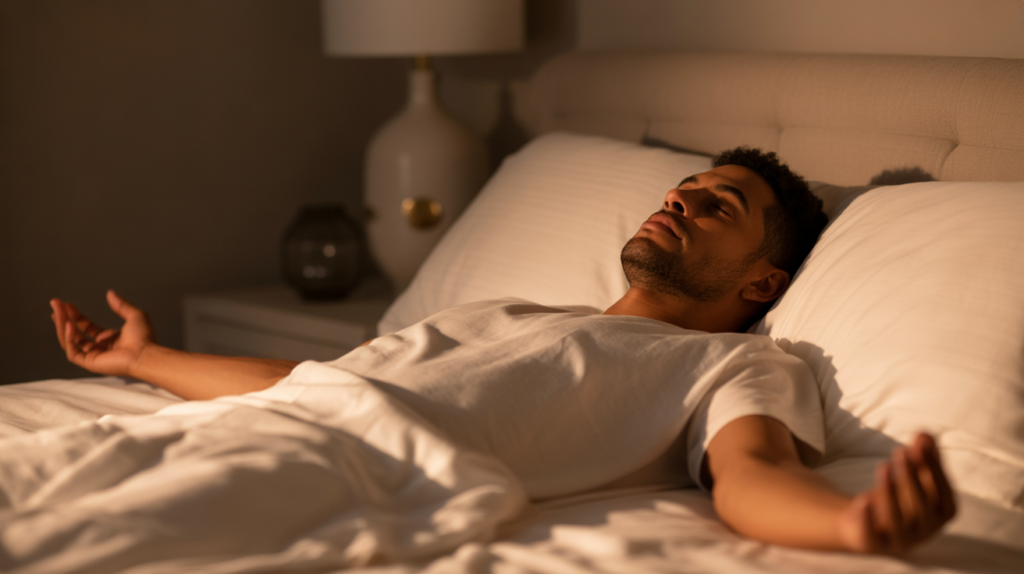
Savasana looks simple yet works deeply. Savasana for relaxation allows all previous poses to integrate fully. Your muscles release layer by layer. Brain waves slow. Awareness becomes soft rather than alert.
Without effort, you experience yoga poses to unwind completely. This is not sleep. It is conscious rest. From here, transitioning into bed feels natural. Many notice fewer awakenings during the night when they end with this posture.
How These Bedtime Yoga Poses Support Your Natural Sleep Cycle
Sleep happens in stages regulated by hormones and rhythm. Yoga at home before bed supports melatonin release naturally. It also stabilizes circadian rhythm timing. Over weeks, your body recognizes consistent cues that bedtime is approaching.
The table below shows how yoga affects sleep physiology without medication.
| Yoga Effect | Sleep Result |
|---|---|
| Lower cortisol | Faster sleep onset |
| Parasympathetic activation | Deeper non-REM sleep |
| Improved circulation | Fewer awakenings |
| Muscle relaxation | Reduced nighttime restlessness |
This explains why a simple night yoga routine supports sleep at a biological level. You are not forcing rest. You are cooperating with your body.
Tips for Making Your Bedtime Yoga Practice More Relaxing
Consistency matters more than intensity. Easy bedtime yoga works best when practiced nightly in the same environment. Dim lights. Reduce noise. Breathe slowly through your nose. Let movements remain gentle. This turns yoga from exercise into ritual.
Think of it as a calming evening routine rather than a task. Even ten minutes helps. Over time, your body recognizes this pattern. This makes it one of the most reliable yoga-without-equipment habits for stress reduction and sleep support.
Final Thoughts—Creating a Peaceful Night Routine with Yoga
Sleep improves when safety replaces stress. 6 Bedtime Yoga Poses That Relax Your Whole Body and Improve Sleep offers a gentle path back to rest. This practice builds trust with your body and patience with your mind. Over time, nights become quieter. Mornings feel lighter.
You do not need perfection. You need presence. Return to these poses nightly. Let them become anchors. With consistency, this calming ritual transforms your relationship with sleep, one breath at a time.
FAQs
Is bedtime yoga safe for beginners?
Yes, beginner-friendly yoga poses are ideal at night because they avoid strain. These movements respect your body’s limits. Gentle yoga for beginners focuses on comfort, not perfection. Listen to your body and move slowly.
How long should a nighttime yoga session be?
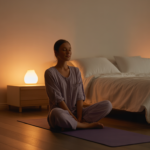
Most people benefit from ten to twenty minutes. Short sessions encourage consistency. Even brief stretching before bed teaches your nervous system to quiet down. Longer sessions are optional, not required.
Can yoga really help with insomnia?
Many people report improved sleep patterns over time. Yoga for better sleep works by calming the nervous system rather than sedating it. This makes the results more sustainable long-term.
Should yoga be done on the bed or floor?
Both work. Use what feels stable and supportive. Yoga at home before bed should feel safe and easy. Comfort matters more than surface.
What if sleep doesn’t come immediately?
That is normal. Rest happens first. Sleep follows naturally. Trust the process. Your body learns with repetition.